Batana Oil for Fuller-Looking Hair: Weight vs Volume
Ask ten people what fuller hair means and you get ten answers: more lift at the roots, thicker-feeling ends, a braid that looks plump instead of stringy. An oil can help with some of these and works against others, and knowing which is which saves you a lot of flat, greasy mornings.
The trade you are actually making
An oil adds weight. That is both the benefit and the catch of using one. On hair that tends to frizz or fly away, weight is welcome: strands lie together, light bounces off a smoother surface, and the whole shape looks denser. On fine, straight hair, the same weight can pull the roots down and make the hair look thinner.
So the useful question is not whether to use oil but where. The American Academy of Dermatology makes the same point in its advice for new mothers who want their hair to look fuller: use a volumizing shampoo, and put conditioner mainly on the ends, because applying it to the scalp and all of the hair tends to weigh hair down, and avoid the heavy, intensive formulas. A rich oil follows the same logic, only more so.
A placement map
- Ends first. Ends are the oldest, driest, most frayed part of the hair, and a little oil there makes them look thicker and blunter.
- Mid-lengths second, only if the hair is coarse or curly and wants more.
- Roots last, and usually never. Oil near the scalp is what flattens hair by midday.
How much, by arithmetic
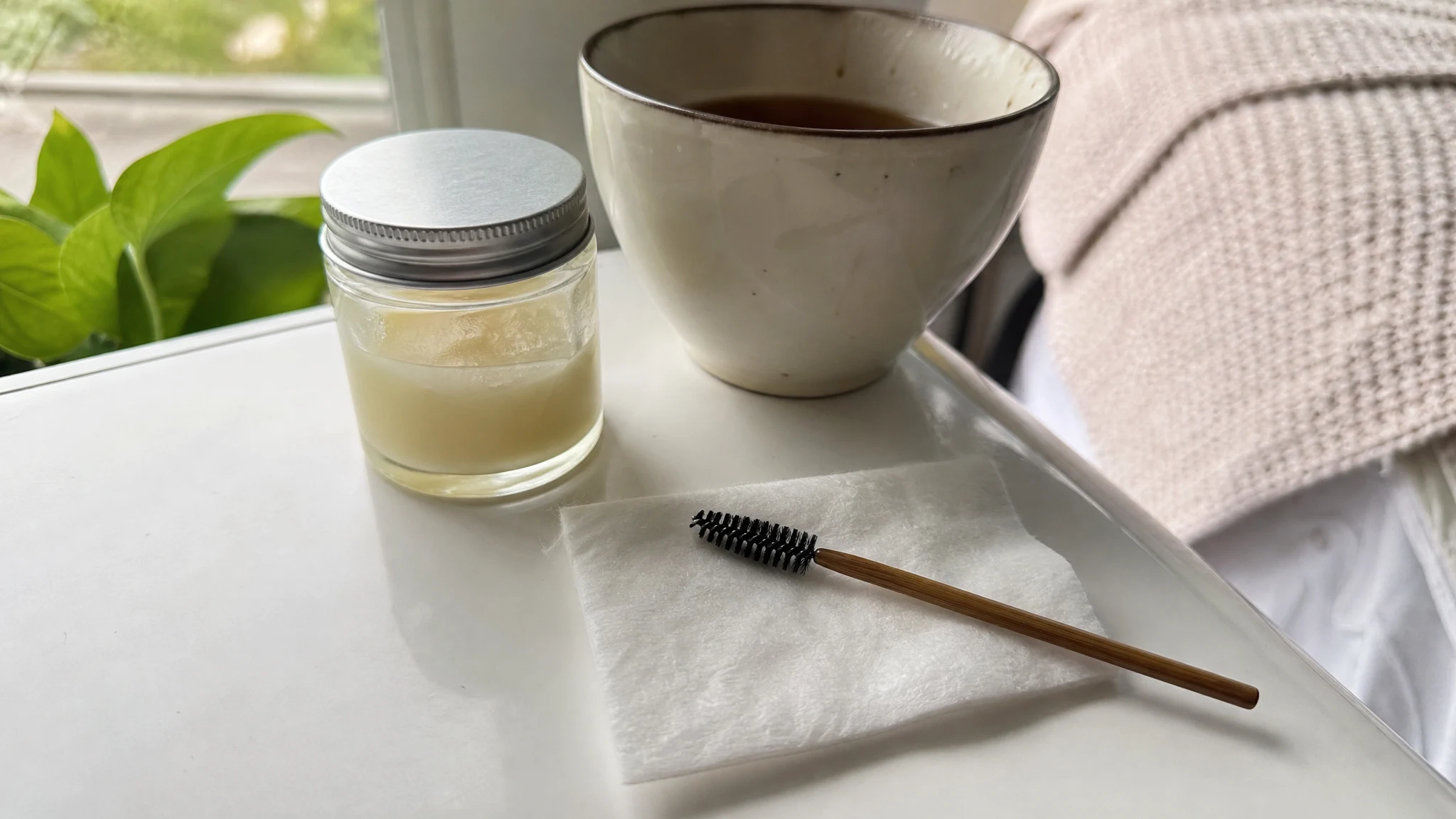
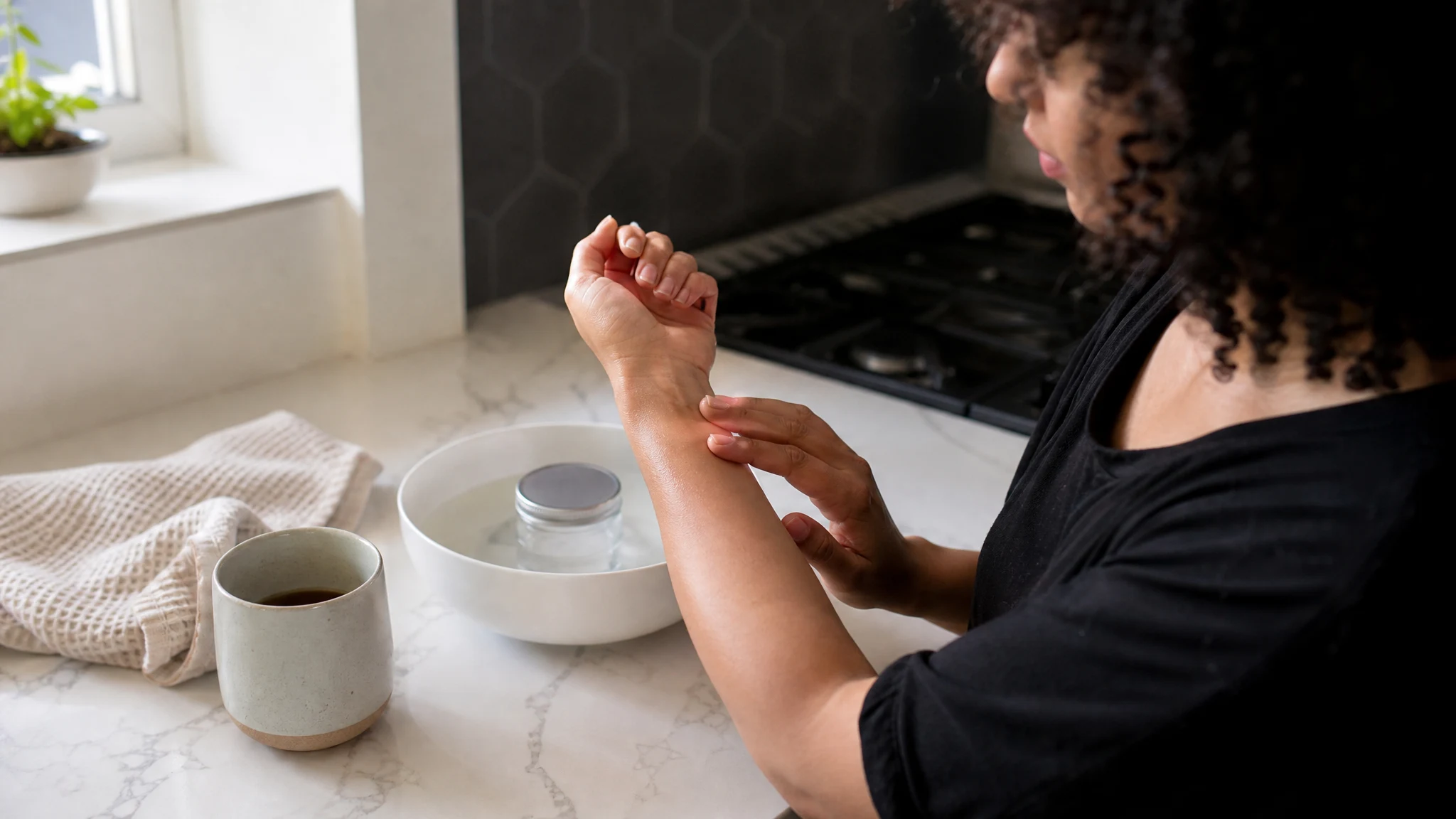
Start with two or three drops of oil, or a pea-sized scoop of our butter rubbed until it melts between your palms. Smooth it over the bottom few inches only. If the hair looks the same, add a drop. If it looks separated into stringy pieces, you have used too much; wash it out at the next shampoo and halve the amount. Thick or coily hair can take noticeably more as you learn what it likes, but the ceiling for fine hair is low. Hair type is the biggest variable here, bigger than the product, so judge by your own mirror rather than by anyone's measurements, ours included.
Timing matters too. On damp hair, a thin layer spreads further and seals in water; on dry hair, it is a finishing touch. Fine hair usually does better with damp-hair application and a single light pass.
What coats, and what does not
A dermatology review of hair cosmetics explains that conditioning ingredients, oils among them, work on the cuticle surface by reducing friction and frizz. Surface changes are exactly why the look changes quickly: smoother strands clump less, catch more light and sit more neatly. They are also why the effect washes out. Fuller-looking is a styling result, and it resets with the next shampoo.
It helps to be honest about what this does not do. An oil does not change how much hair you have or how it behaves beneath the surface of the scalp. If you notice more shedding than usual, or your parting seems wider, make an appointment with a dermatologist. That is the right route, and a cosmetic oil is not a substitute for it.
Small adjustments that add up
None of these are dramatic, and together they decide whether a rich oil looks like polish or like weight.
- Detangle gently from the ends upward before applying anything.
- Rinse out build-up occasionally; hair that looks limp after weeks of oiling is often just coated.
- Use the oil as a finish after styling, not before a blow-dry that you want to lift.
- Check your hair in daylight near a window; indoor lighting hides both shine and greasiness.
- Change one thing at a time, so you know which change did what.
For a full walkthrough of application, our hair guide covers the basics, the fine hair post goes deeper on light touch, and the safety post has the patch test details.
The goal is hair that looks like itself on its best day, only a little glossier. Start small, look in daylight, and adjust.
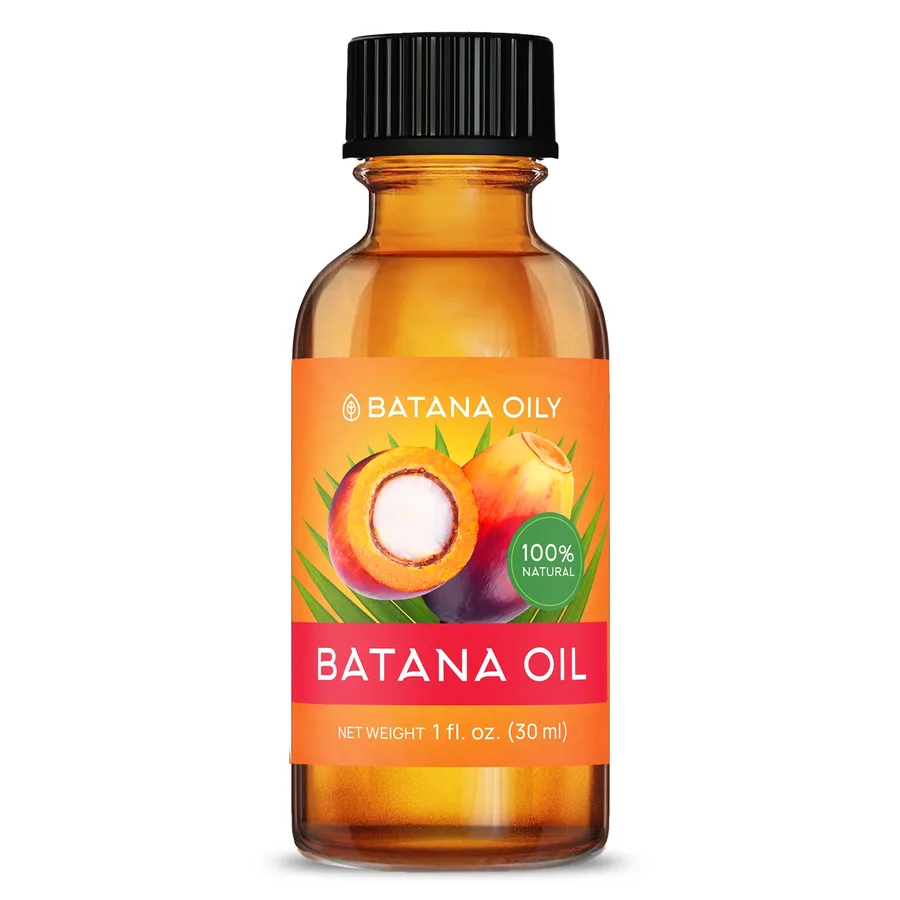
Natural Batana Oil
Honduran batana oil and batana butter, from a small bottle to bulk sizes.
From $12.99
Shop Batana Oil →Sources & Further Reading
- Hair loss in new moms: Dermatologist tips (American Academy of Dermatology)
- Gavazzoni Dias MF. Hair cosmetics: an overview. Int J Trichology, 2015.