Batana Oil vs Argan Oil: Treatment or Finishing Oil?
If batana oil is the deep treatment you do before washing, argan is the finishing touch before you leave the house. They are both lovely, and they are rarely asked to do the same job. Understanding that is most of the decision.
Two different jobs
Argan oil is known as a finishing oil: a small amount smoothed over dry hair for shine and a neater look. Batana is more of a treatment oil, applied generously before washing and rinsed out afterward, and we describe it that way because it is how people typically use rich oils. The distinction is a reasoned one, not a laboratory result, and it follows from how much oil you want left on your hair when you step out the door.
What argan is made of
A 2024 review of cosmetic oils gives argan's two main fatty acids as oleic acid (43 to 49 g per 100 g) and linoleic acid (29 to 37 g per 100 g), which gives it a balanced profile of monounsaturated and polyunsaturated fats. Batana comes from a palm nut instead, Elaeis oleifera, and in a 2017 palm analysis its kernels were rich in lauric, myristic and oleic acid. So both oils include oleic acid, but argan is paired with linoleic while palm kernel oils lean on shorter saturated fatty acids. We do not publish a profile for our own jar, so these are comparisons of the plants, not promises about a bottle.
Which wins, and when
Think of it as a calendar rather than a contest.
- Before a wash: batana. Work a small amount through the lengths, leave it on, then shampoo. The wash-out steps are in our wash-out guide.
- On dry hair, before an event: argan. A drop or two warmed between your palms is plenty.
- Fine, straight hair: either one needs a very light hand; our post on fine, straight hair shows how to keep it from looking flat.
- Thick or coily hair: batana can be applied more generously, and argan can finish the style afterward.
Shine, and how much is enough
Shine is what finishing oils are bought for, and it comes from a thin, even film over the surface of the hair rather than from a lot of product. That is the reason a drop or two works better than a palmful. A rich treatment oil like batana asks for a different mindset: it is generous on purpose, and the shampoo afterward is part of the routine. Seen that way, choosing between them is really choosing the moment in your week you want to spend.
Applying with a light hand
With finishing oils, the usual mistake is too much. Start with less than you think, warm it in your hands, and work from the ends upward. You can always add a touch more; you cannot take it back without washing. Our butter is the thicker form of batana and is less likely to drip, which some people find easier to measure.
A word on honesty
We sell batana oil and butter, and we do not sell argan oil; if you want a finishing oil, a craft supply shop, pharmacy or grocery store carries it. That is the right answer for finishing. If what you want is a rich pre-wash treatment with an earthy aroma, our batana oil fits better. Our hair oil comparison places both next to castor, coconut and jojoba.
Skin and hair vary from person to person, so patch test before first use and avoid your eyes. If you are dealing with something beyond a cosmetic concern, a dermatologist is the person to see.
Keeping both on the shelf, one for before the shower and one for after, is a perfectly reasonable answer.
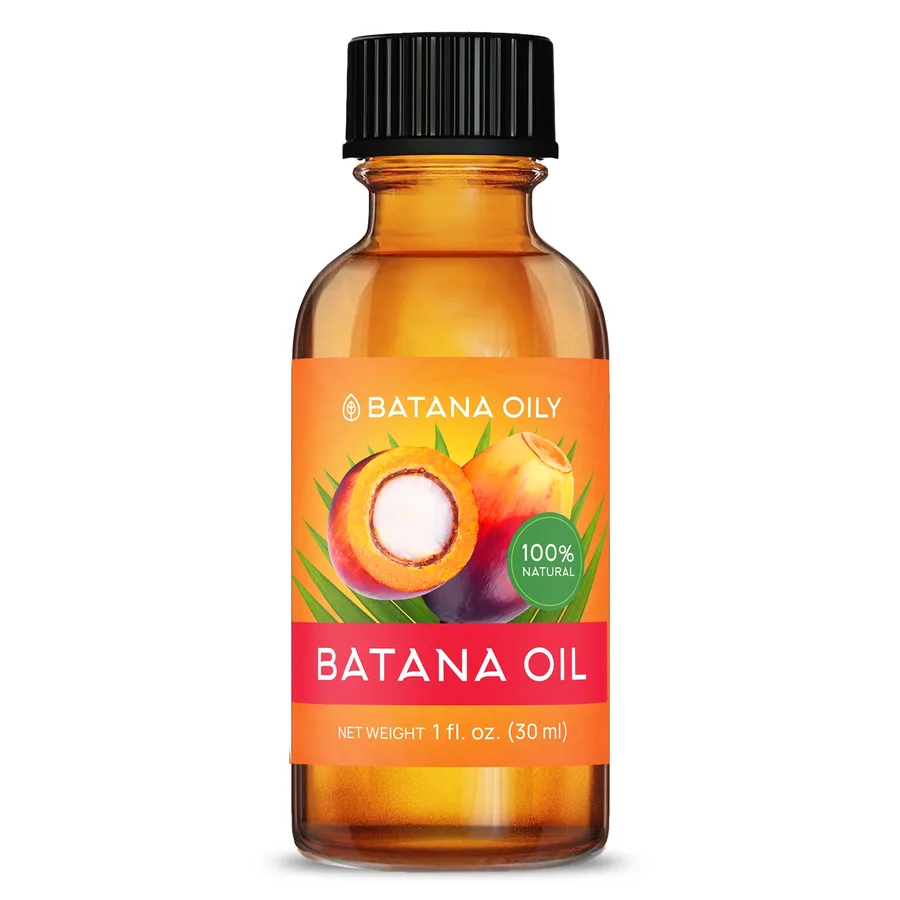
Natural Batana Oil
Honduran batana oil and batana butter, from a small bottle to bulk sizes.
From $12.99
Shop Batana Oil →Sources & Further Reading
- A Comprehensive Review of Plant-Based Cosmetic Oils (Virgin Coconut Oil, Olive Oil, Argan Oil, and Jojoba Oil): Chemical and Biological Properties and Their Cosmeceutical Applications (2024), for the coconut, argan and jojoba composition figures.
- Characterization of Mesocarp and Kernel Lipids from Elaeis guineensis Jacq., Elaeis oleifera [Kunth] Cortés, and Their Interspecific Hybrids (Journal of Agricultural and Food Chemistry, 2017), for the fatty acids in American oil palm kernels.