Batana Oil vs Chebe Powder: Two Traditions Compared
Chebe is not an oil, and nobody should sell you on it as one. It is a ground herbal mixture with a long history among the Basara Arab women of Chad, and it has been carried around the world by people who admire the tradition. Batana has its own tradition, in Honduras. Putting the two side by side is less a contest than an introduction to two different ways of caring for hair.
Chebe: a powder and a ritual
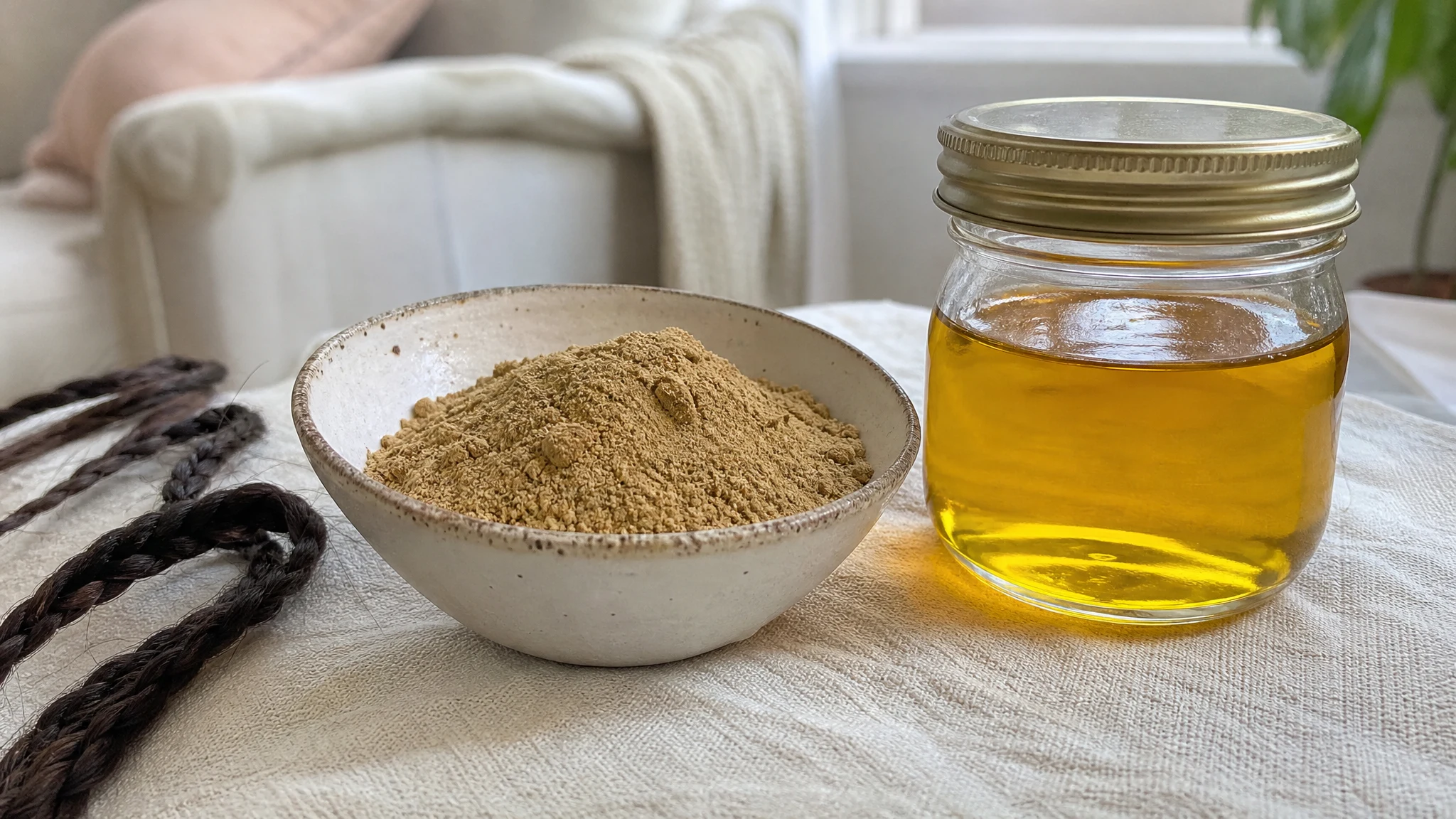
An Allure report describes chebe as a mixture that includes shébé seeds, mahllaba seeds, missic stone, cloves and samour resin, ground and mixed with water into a paste. In the traditional way it is applied along braids or twists, mostly on the lengths and ends, and left in place for several days. Accounts of the practice differ in the details, and the same report notes that the scientific literature on chebe is limited. We say that as a point of respect: this is a practice that belongs to the Basara women, and it is not ours to explain beyond what has been written about it.
Modern brands often blend chebe into creams and oils for convenience, and that is a different thing from the traditional paste. If you try a chebe product, patch test first, as the dermatologist quoted in that Allure piece suggests, by dabbing a little behind the ear and checking back in a day or two.
Batana: a palm-nut oil from Honduras
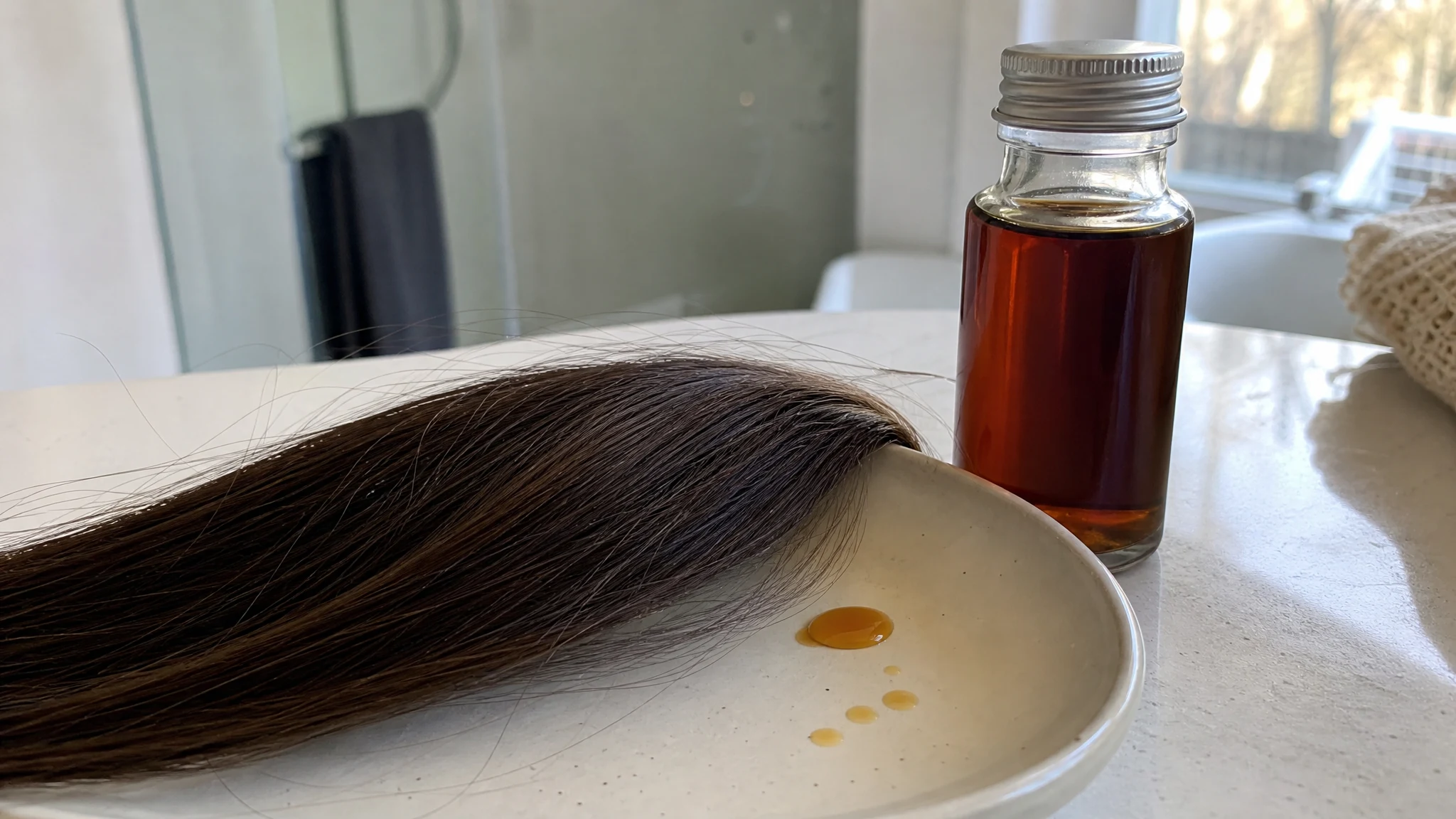
Batana oil comes from the nuts of the American oil palm, Elaeis oleifera, and our origin page explains that it is traditionally extracted by indigenous communities in Honduras. In a 2017 analysis, kernels of this species were rich in lauric, myristic and oleic acids. We offer it as an oil, in liquid form and as a thicker butter, with an earthy aroma, and we recommend a patch test before first use.
How they are used
This is the real contrast, and it is about method more than ingredients.
- Chebe is a dry powder that is mixed into a paste, applied to the lengths of braided or twisted hair, and left on.
- Batana is an oil you smooth through hair, often before shampooing, and wash out afterward; our usage guide covers the steps.
Chebe does not replace an oil, and an oil does not replace chebe. The Allure report notes that oils are not part of the traditional method but that modern products often combine chebe with oils, so a batana oil routine and a chebe routine can sit side by side, as your own experiment and not as a recipe from us.
Who each suits
Chebe is closely associated with protective styles on textured hair, and our post on batana oil for 4C hair speaks to that same hair type from the oil side. If you wear braids, twists or locs, you may enjoy both traditions at different moments of your routine. If you want a simple rich oil, batana alone is easy. We do not sell chebe, so look for it from a seller who names the ingredients and where they come from, such as a craft supply shop or an importer of African goods.
Neither one is a medical product. If your concern is something beyond a cosmetic one, a dermatologist is the professional to ask.
Where we come out
We would not call either better. Chebe is a cultural practice with a method; batana is an ingredient with a story of its own. If you are curious about the wider field, our overview of hair oils sets batana next to the oils people most often ask about.
The most respectful way to enjoy both is to learn how they are traditionally used before you start improvising.
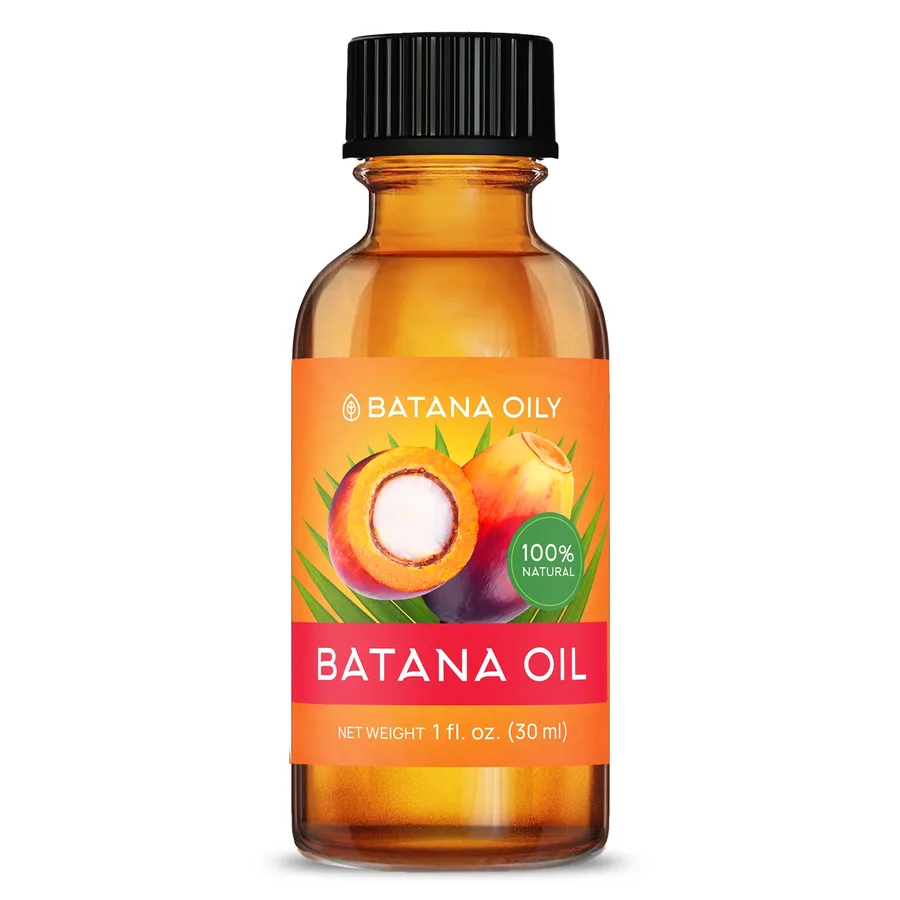
Natural Batana Oil
Honduran batana oil and batana butter, from a small bottle to bulk sizes.
From $12.99
Shop Batana Oil →Sources & Further Reading
- Will Chebe Powder Really Grow Your Hair Down to Your Waist? (Allure, republished by Yahoo, 2021).
- Characterization of Mesocarp and Kernel Lipids from Elaeis guineensis Jacq., Elaeis oleifera [Kunth] Cortés, and Their Interspecific Hybrids (Journal of Agricultural and Food Chemistry, 2017), for the fatty acids in American oil palm kernels.