Batana Oil vs Coconut Oil: How They Differ on Hair
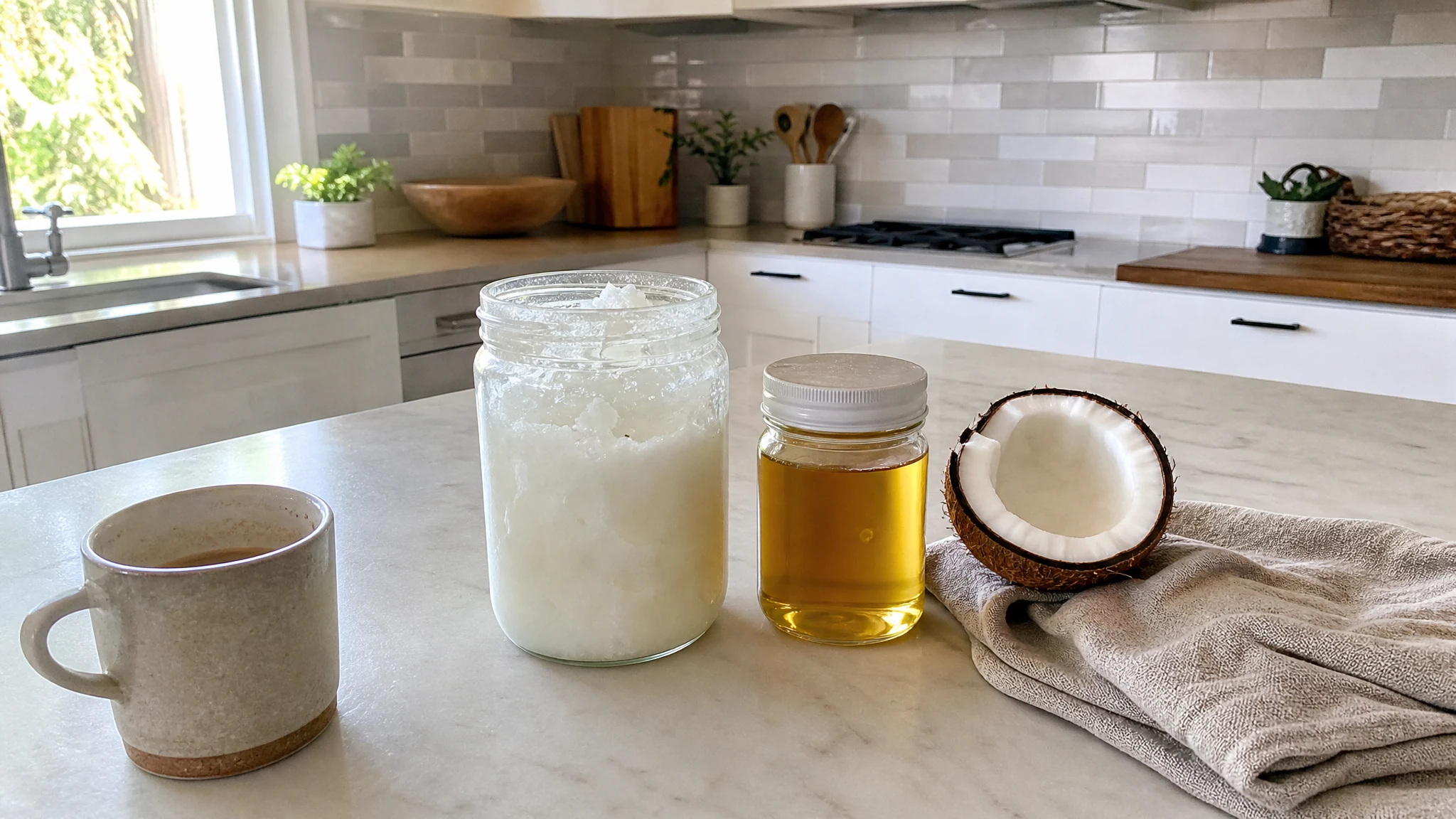
Coconut oil has a head start in the hair-oil world: nearly everyone already owns a jar. It is also one of the very few oils that has been put through a proper laboratory comparison on hair, which makes it a more interesting rival to batana than you might expect.
What the coconut study actually found
In a 2003 study in the Journal of Cosmetic Science, Rele and Mohile compared coconut oil with mineral oil and sunflower oil on hair of several types, undamaged and damaged, applied before and after washing, and measured protein loss from the hair. Coconut oil was the only one of the three that reduced the amount of protein lost, and the authors suggested the reason was its makeup: it is mostly lauric acid, a small straight-chain fatty acid, so the oil can enter the hair shaft, while mineral oil, a hydrocarbon, has no such affinity.
That is a laboratory finding about coconut oil, not about batana, and we would not stretch it to cover our oil. What it tells us is that the small, saturated fatty acid in coconut is an unusually good fit for hair.
Where batana comes into it
Batana oil comes from the nut of the American oil palm, Elaeis oleifera. Palm kernels share a family resemblance with coconut: in a 2017 analysis, the main kernel fatty acids in this species were lauric, myristic and oleic acid, the same lauric and myristic acids that rank first and second in coconut. That does not make the two the same oil. Coconut is mostly lauric at around 46 to 48 percent in virgin oil, while the American palm kernels showed more long-chain unsaturated fatty acids than the African palm. We do not publish a profile for our jar, so we will not say how closely it tracks either one.
What we can say is how we think about them as products. Our oil has an earthy aroma and comes from Honduras; our butter is the thicker form. Coconut oil is familiar, widely available and the one with the published pre-wash study behind it.
Choosing by hair type
- You want the well-documented option: coconut oil, used before washing, is the one the 2003 study looked at. Pick it up at any grocery store.
- You have fine hair that tires quickly: go light with either, and keep it to the ends; our guide for hair that looks tired goes into placement.
- You like an earthy aroma and want something different from the pantry: that is where batana earns a place.
Whichever you choose, apply it to the lengths first. If your hair tends to feel weighed down, use less than you think you need; you can always add more later.
Using them together
Nothing stops you from keeping both. Many people keep a jar of coconut for pre-wash and a bottle of something else for finishing. If you are weighing several oils at once, our overview of hair oils puts coconut, castor, argan and jojoba on one page.
We do not sell coconut oil, so if you want to try it you will find it at a grocery store or a craft supply shop. If you would like to try batana, our oil is the place to start. Skin and hair vary from person to person, so patch test before first use and keep it out of your eyes.
Both oils are easy to like, and a small test on a few strands will tell you more than any chart.
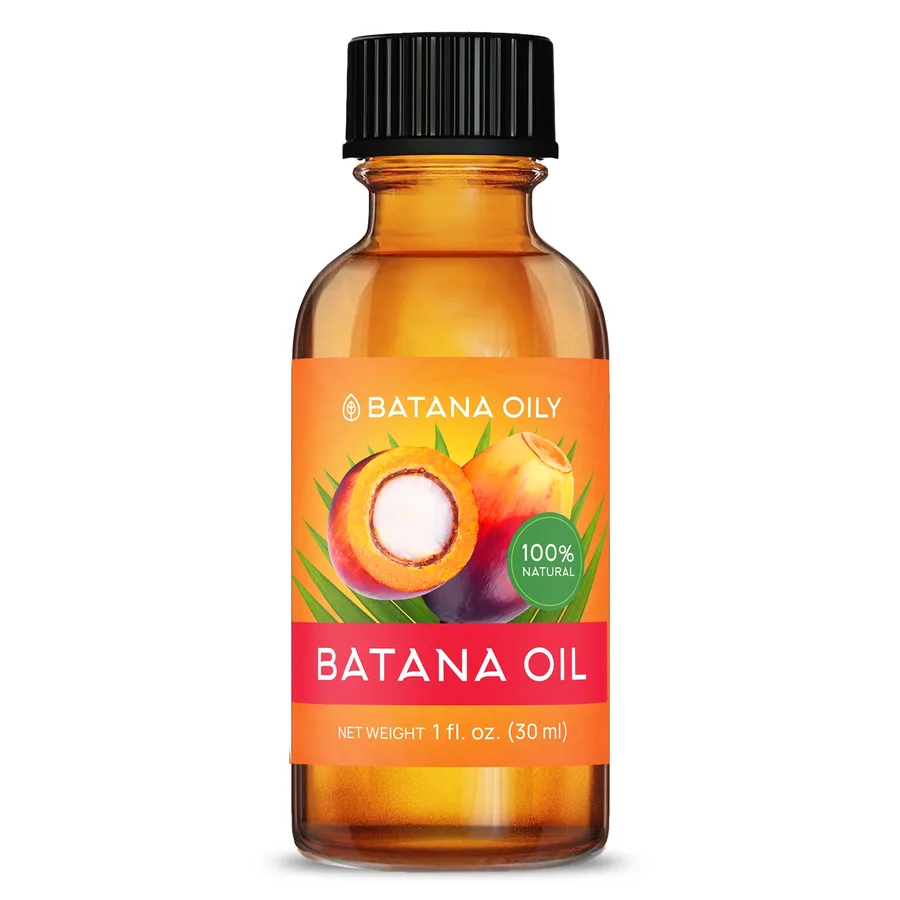
Natural Batana Oil
Honduran batana oil and batana butter, from a small bottle to bulk sizes.
From $12.99
Shop Batana Oil →Sources & Further Reading
- Effect of mineral oil, sunflower oil, and coconut oil on prevention of hair damage (Rele and Mohile, Journal of Cosmetic Science, 2003).
- A Comprehensive Review of Plant-Based Cosmetic Oils (Virgin Coconut Oil, Olive Oil, Argan Oil, and Jojoba Oil): Chemical and Biological Properties and Their Cosmeceutical Applications (2024), for the coconut, argan and jojoba composition figures.
- Characterization of Mesocarp and Kernel Lipids from Elaeis guineensis Jacq., Elaeis oleifera [Kunth] Cortés, and Their Interspecific Hybrids (Journal of Agricultural and Food Chemistry, 2017), for the fatty acids in American oil palm kernels.