Batana Oil vs Other Hair Oils: A Plain-English Comparison
Open any hair-oil aisle and you will find a dozen bottles that all promise to make hair look glossy and feel soft. The useful question is not which oil wins but which one fits the way your hair behaves, how much time you want to spend on it, and whether you like what it smells like on a Tuesday morning. We sell batana oil, so we will tell you where we think it fits and where another bottle is the better pick.
Start with what each one actually is
Most of the oils people compare are triglyceride oils pressed or extracted from seeds, nuts or fruit, and what separates them is mainly which fatty acids they are rich in. Castor oil is the outlier, because roughly 85 to 90 percent of its fatty acids is ricinoleic acid, an unusual fatty acid that carries an extra hydroxyl group. Coconut oil is built mostly on lauric acid, at around 46 to 48 percent in virgin coconut oil. Argan oil leans on oleic acid (43 to 49 g per 100 g) and linoleic acid (29 to 37 g per 100 g). Jojoba is not really an oil at all in the chemical sense: more than 98 percent of it is liquid wax.
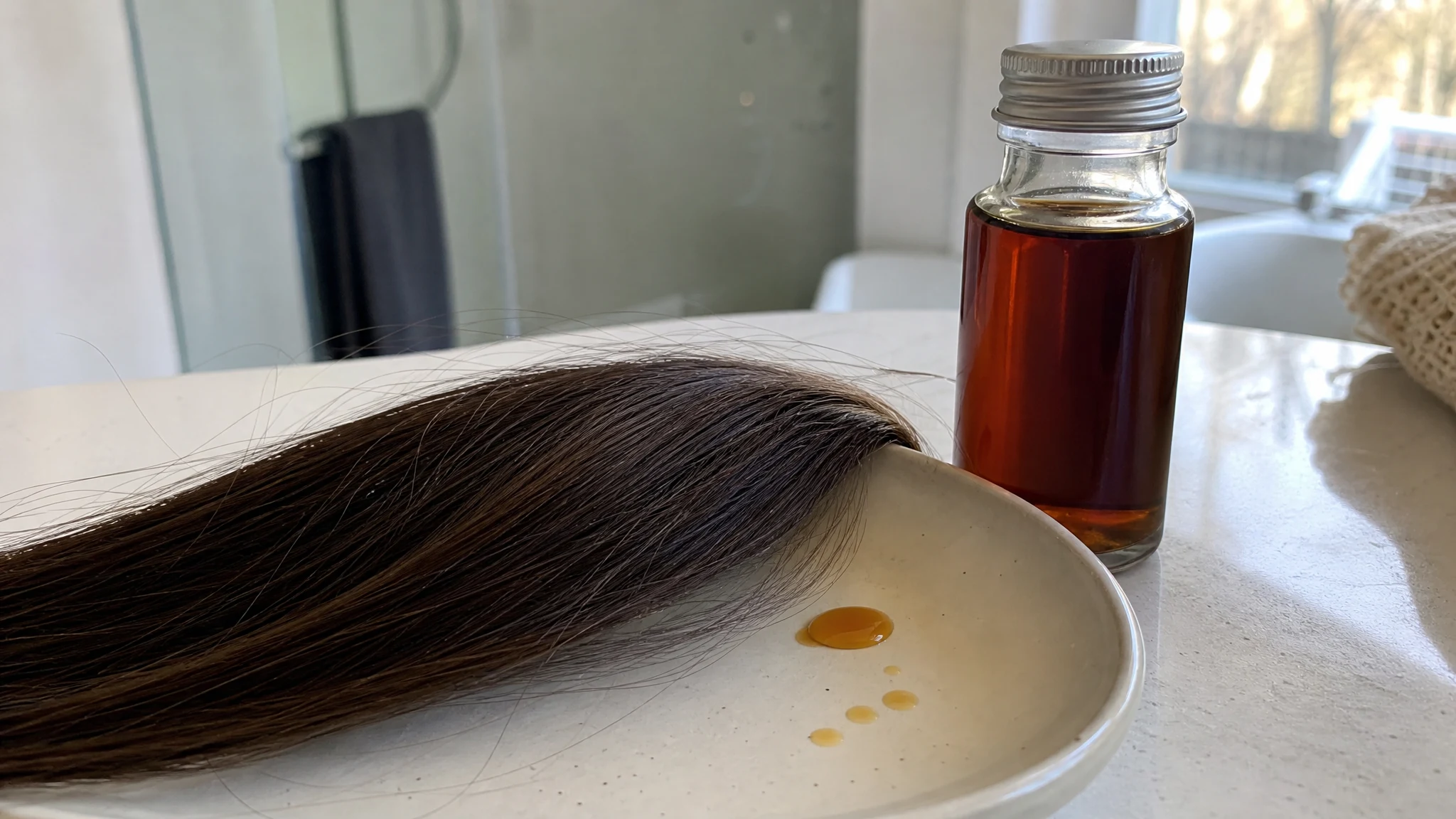
Batana oil comes from the nuts of the American oil palm, Elaeis oleifera. In a 2017 analysis of palm fruit lipids, the main fatty acids in the kernels of this species were lauric, myristic and oleic acid, and the American palm showed more long-chain unsaturated fatty acids than its African cousin. We mention that to place batana in the palm family, not to quote a profile for our jar; what you can expect from us is an oil with an earthy aroma, made in Honduras by traditional methods.
The comparison at a glance
| Ingredient | What it is | Defining feature (from the sources below) |
|---|---|---|
| Batana oil | Palm-nut oil, Elaeis oleifera | Palm kernel fatty acids: lauric, myristic, oleic |
| Castor oil | Seed oil | About 85 to 90 percent ricinoleic acid |
| Coconut oil | Fruit kernel oil | Lauric acid, about 46 to 48 percent |
| Argan oil | Kernel oil | Oleic and linoleic acids |
| Jojoba oil | Liquid wax | Over 98 percent waxes |
| Rosemary oil | Essential oil | Concentrated; always diluted in a carrier |
| Chebe | Powder blend | A paste ingredient, not an oil |
Choosing by what your hair needs
Here is how we would steer a curious customer, reasoning from those compositions rather than from any promise.
- You want a rich pre-wash treatment: batana or castor. Castor is famously thick, which is part of its appeal and part of why it takes patience to wash out; our batana versus castor comparison goes through the trade.
- You want a light touch for finishing: argan is the one most people reach for, and we explain the difference in batana versus argan.
- You like a familiar pantry oil: coconut has a published study behind its pre-wash use, covered in batana versus coconut.
- You prefer something close to a wax: jojoba, in batana versus jojoba.
Two things that are not really oil rivals
Rosemary is an essential oil, so it is used in drops and diluted into a carrier, which makes it a partner for an oil like batana more than a competitor; the details are in batana versus rosemary. Chebe is a powder from Chad that is used in an entirely different way, and it deserves respect on its own terms in batana versus chebe.
Our verdict: no single oil suits every head of hair. Pick castor or batana for a rich treatment, argan or jojoba for a light finish, coconut if you want the one with a published study behind it. If you are new to batana, our hair guide and how to use it are the best places to begin.
If you want to try batana
We offer Natural Batana Oil and, if you prefer something less likely to drip, Natural Batana Butter, which has the same uses in a thicker consistency. Skin and hair vary from person to person, so patch test before first use and keep it away from your eyes. Everything else on that comparison table, from castor to rosemary, you will find at a craft supply shop, pharmacy or grocery store.
Whichever bottle ends up on your shelf, the best hair oil is the one you enjoy using often enough to learn how your hair responds.
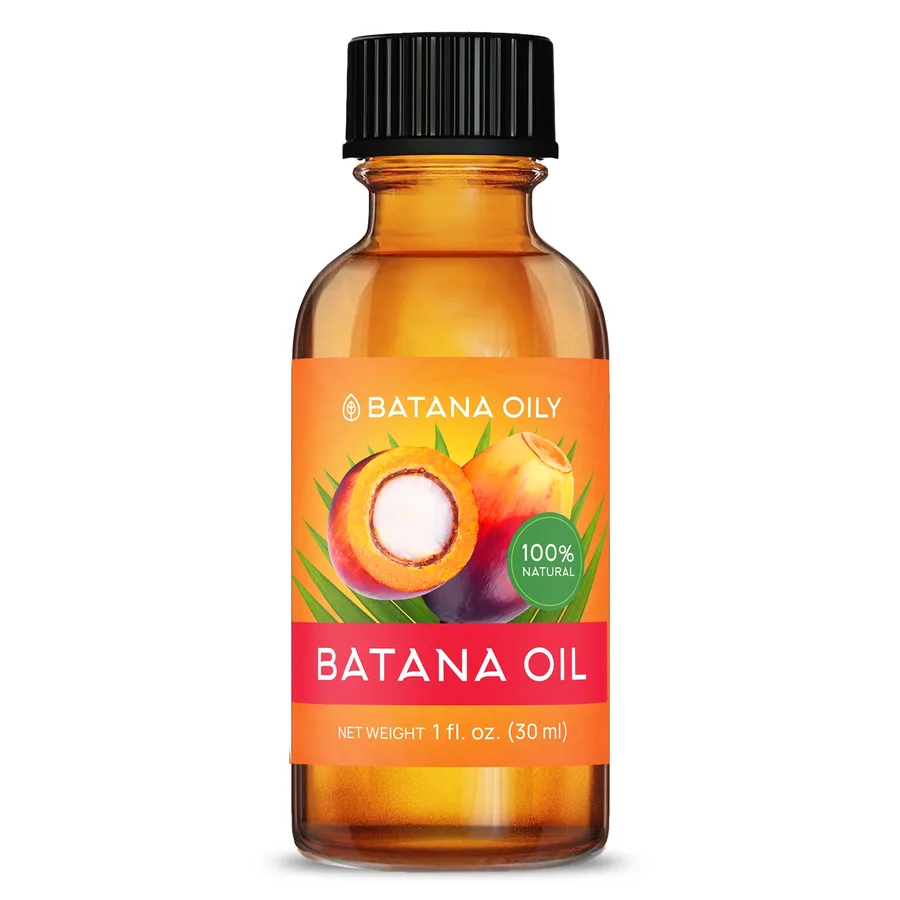
Natural Batana Oil
Honduran batana oil and batana butter, from a small bottle to bulk sizes.
From $12.99
Shop Batana Oil →Sources & Further Reading
- A Comprehensive Review of Plant-Based Cosmetic Oils (Virgin Coconut Oil, Olive Oil, Argan Oil, and Jojoba Oil): Chemical and Biological Properties and Their Cosmeceutical Applications (Molecules/PMC, 2024), for the coconut, argan and jojoba composition figures.
- Phytochemistry, Pharmacological Potential and Industrial Applications of Ricinus communis L.: A Review (2026), for the ricinoleic acid share of castor oil.
- Characterization of Mesocarp and Kernel Lipids from Elaeis guineensis Jacq., Elaeis oleifera [Kunth] Cortés, and Their Interspecific Hybrids (Journal of Agricultural and Food Chemistry, 2017), for the fatty acids in American oil palm kernels.