Batana Oil vs Castor Oil: Which Suits Your Hair?
Pour a spoonful of castor oil and it moves like cold honey. Pour batana oil and you are in a different conversation. Both get called heavy treatment oils, and both are loved for a good reason, but they are built differently and they reward different hair.
Why castor feels the way it does
Castor oil is a one-fatty-acid story. A recent review of the castor plant puts ricinoleic acid at roughly 85 to 90 percent of the oil, and that fatty acid carries a hydroxyl group that most plant oils do not have. We reason from that chemistry that it is the reason castor is so thick and so sticky between the fingers; the review itself says the hydroxyl is responsible for the oil's distinctive physical properties. Whatever the label, including the darker styles sold as Jamaican black castor oil, the signature of castor is the same bean and the same ricinoleic backbone.
The practical consequence is simple enough. A thick oil coats, so a little goes a very long way, and it takes more shampooing to rinse out than a thinner one. That is not a flaw; plenty of people choose castor precisely because it feels substantial on the ends.
Where batana sits
Batana oil is a palm-nut oil from Elaeis oleifera, the American oil palm. In a 2017 comparison of palm fruit lipids, the kernels of this species were rich in lauric, myristic and oleic acid, with more long-chain unsaturated fatty acids than the African palm. That is a different fatty acid family from castor, with no hydroxyl fatty acid in the lead. We do not quote a lab profile for our own jar, so treat that as a description of the species and not a promise about a specific batch. What we do say is that our oil has an earthy aroma and is made in Honduras, and that our butter is the thicker form for anyone who finds a pourable oil too runny.
Choosing by hair, not by hype
- Fine or easily weighed-down hair: either oil goes on sparingly and mostly on the ends. If you want a lighter finish, argan is the usual answer.
- Thick, coily or dry-feeling hair: this is where both shine as pre-wash treatments, and our 4C guide explains how people tend to apply them.
- Short on time at wash day: a thinner oil is easier to rinse; castor asks for a second shampoo lather, which our wash-out guide covers for batana.
Can you use both?
Yes, and many people do, since they are both just oils and mix without drama. A common approach is to keep the thicker one for the ends and the lighter one for everything else. We would simply add one oil at a time at first so you can tell what you like. If you want to see how an oil blend can fit around a stronger ingredient, our post on batana and rosemary shows the principle.
So which one?
If you like a rich, sticky, old-fashioned feel and do not mind the washing out, castor is a great choice, and you will find it at a craft supply shop, pharmacy or grocery store because we do not sell it. If you want an oil with an earthy aroma that comes from the palm tradition of Honduras, we would point you to our batana oil. Neither is a better oil in the abstract. For the wider lineup, our hair oil comparison puts them next to the rest.
As ever, patch test before first use and keep any oil out of your eyes. If your concern is anything medical, such as an irritated scalp, a dermatologist is the right person to ask.
Pick the oil that makes wash day something you look forward to, and let your own hair settle the debate.
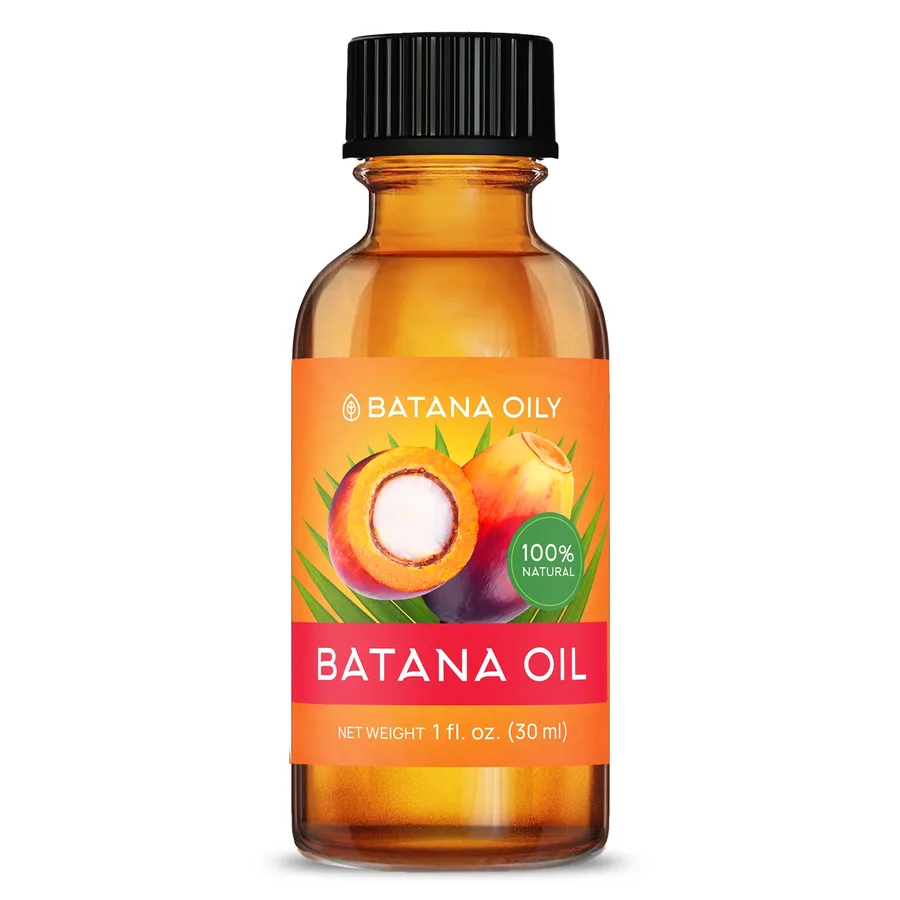
Natural Batana Oil
Honduran batana oil and batana butter, from a small bottle to bulk sizes.
From $12.99
Shop Batana Oil →Sources & Further Reading
- Phytochemistry, Pharmacological Potential and Industrial Applications of Ricinus communis L.: A Review (2026), for the ricinoleic acid share of castor oil.
- Characterization of Mesocarp and Kernel Lipids from Elaeis guineensis Jacq., Elaeis oleifera [Kunth] Cortés, and Their Interspecific Hybrids (Journal of Agricultural and Food Chemistry, 2017), for the fatty acids in American oil palm kernels.