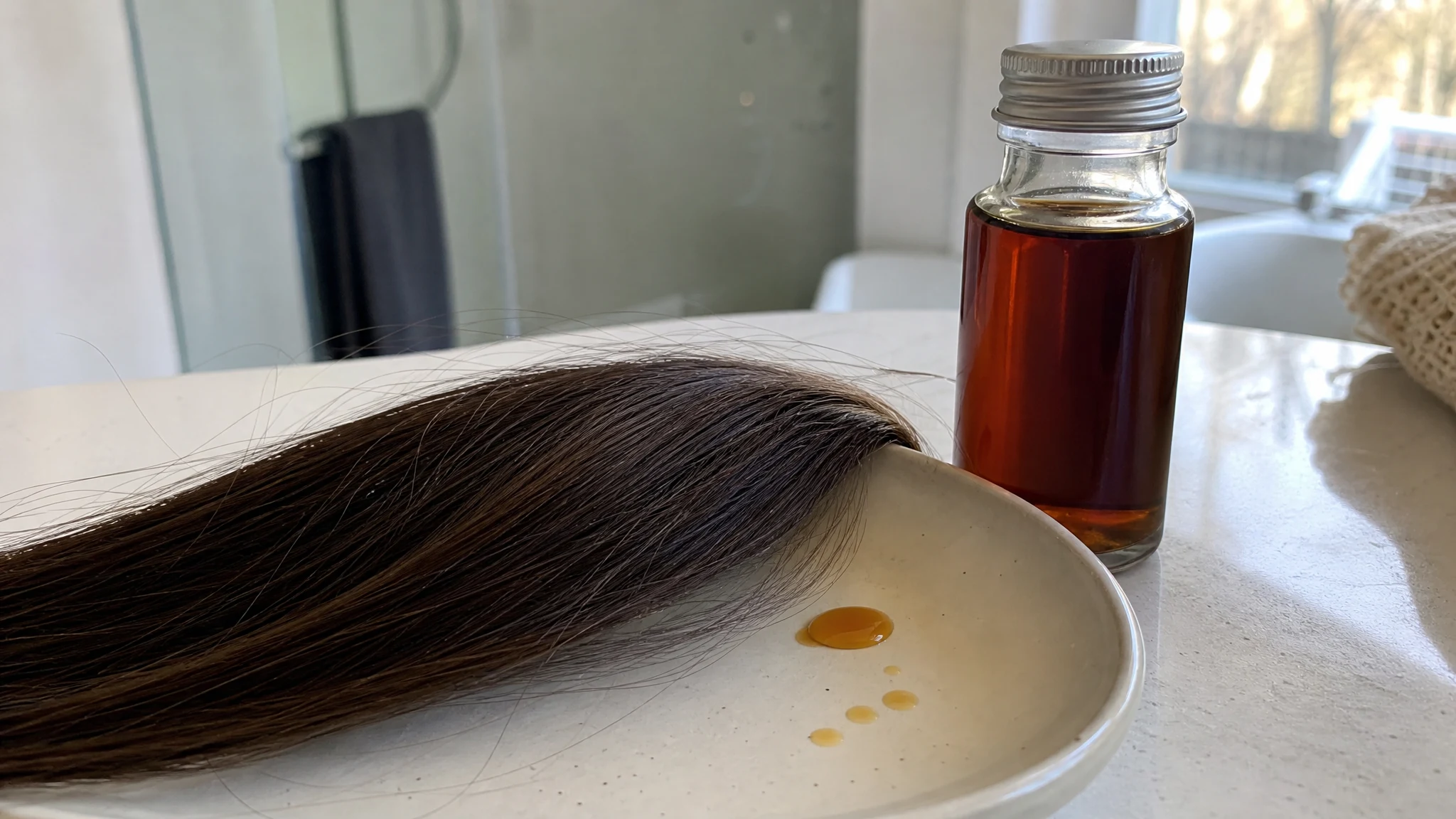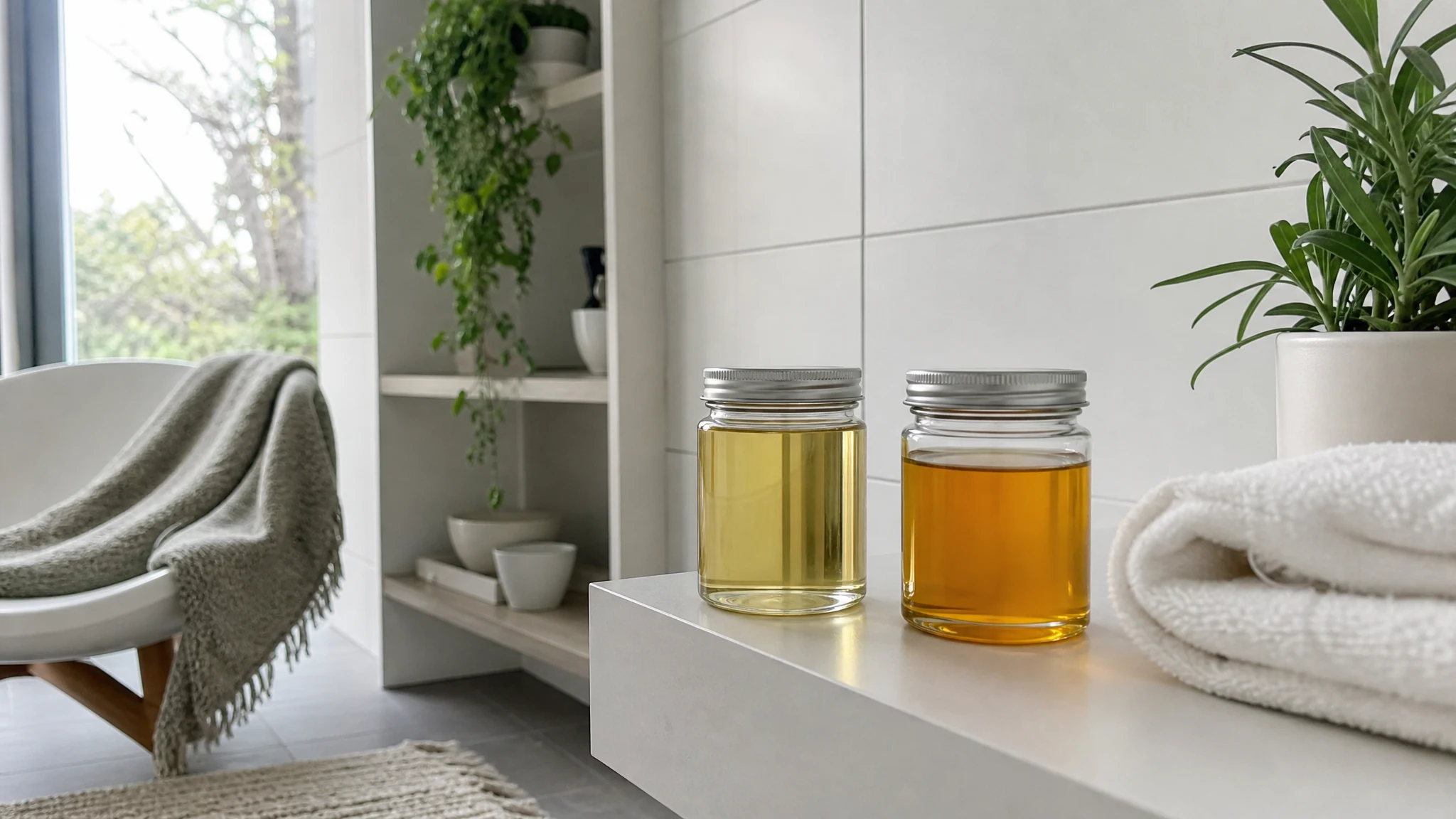
Batana Oil vs Jojoba Oil: A Liquid Wax and a Palm Oil
Jojoba has a quirk that most oil comparisons skip: it is not an oil, chemically speaking. It is a liquid wax. That single fact explains why jojoba feels the way it does, and why it makes a good comparison for batana, which is a very different kind of ingredient.
A wax that looks like an oil
Ordinary plant oils, including coconut, argan and castor, are built from triglycerides, three fatty acids hanging off a glycerol backbone. Jojoba is made of wax esters instead. A 2024 review of cosmetic oils notes that jojoba is known as a liquid wax rather than a fat or oil because more than 98 percent of it is waxes, mostly wax esters, with small amounts of free fatty acids, alcohols and sterols. The same review lists wax esters such as eicosenyl eicosenoate and docosenyl oleate among its main constituents.
We reason from that structure that jojoba should behave differently from a triglyceride oil: it is a long, tidy molecule that is liquid at room temperature, not a fat that needs warming. That fits jojoba's reputation as a light liquid.
Where batana comes in
Batana oil is a triglyceride oil, from the nuts of the American oil palm. A 2017 analysis of palm fruit lipids found lauric, myristic and oleic acids as the main fatty acids in Elaeis oleifera kernels, with more long-chain unsaturated fatty acids than the African palm. So the two are different families entirely, one a wax and one a fat. We do not publish a fatty acid profile for our own oil, so those are species-level facts.
What we can offer is the practical difference. Our oil has an earthy aroma and comes from Honduras; our butter is the thicker form and less likely to drip or spill. Jojoba, by contrast, is a different kind of ingredient altogether and is easy to find elsewhere.
Weight and scalp feel
Because jojoba is a thin liquid, we would expect it to spread easily and to need only a little, which is also why it is a familiar carrier for essential oils. Batana's strength is the opposite: it is a richer treatment that you leave on briefly and then wash out. If you are working on the scalp, our posts on dry-feeling scalps and on scalp massage show how people approach it.
We will not tell you either one balances oil on the scalp or treats anything; neither is a medical product. If your scalp is itchy, flaky or sore, a dermatologist is the right person to ask.
When each is the better pick
- You want something light and nearly scentless for daily smoothing: jojoba.
- You want a richer treatment with an earthy aroma, applied before washing: batana.
- You like to blend with essential oils: jojoba is a common carrier, though batana works too.
- You are building a small collection: have one light and one rich; our hair oil overview shows the full lineup.
Our verdict
This one is a genuine tie, because they are not trying to do the same thing. If you want a light daily smoother, buy jojoba at a craft supply shop, pharmacy or grocery store; we do not sell it. If you want a richer pre-wash treatment, our batana oil is a good place to start, and our butter is there if you prefer a thicker consistency. Patch test before first use, and avoid your eyes.
It is easy to love a wax and a palm oil for different reasons, and your hair is allowed to like both.
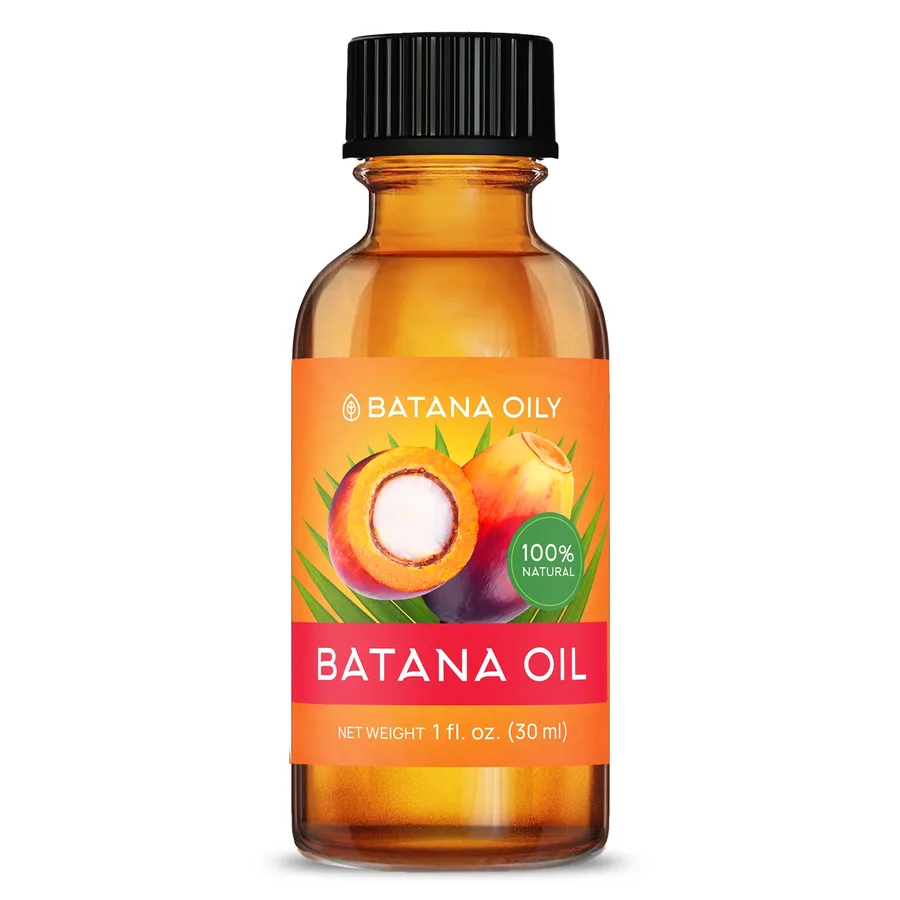
Natural Batana Oil
Honduran batana oil and batana butter, from a small bottle to bulk sizes.
From $12.99
Shop Batana Oil →Sources & Further Reading
- A Comprehensive Review of Plant-Based Cosmetic Oils (Virgin Coconut Oil, Olive Oil, Argan Oil, and Jojoba Oil): Chemical and Biological Properties and Their Cosmeceutical Applications (2024), for the coconut, argan and jojoba composition figures.
- Characterization of Mesocarp and Kernel Lipids from Elaeis guineensis Jacq., Elaeis oleifera [Kunth] Cortés, and Their Interspecific Hybrids (Journal of Agricultural and Food Chemistry, 2017), for the fatty acids in American oil palm kernels.