How to Get Batana Oil Out of Pillowcases and Towels
Oil on fabric looks like a disaster and is usually a short job. A fresh patch of batana oil on a pillowcase comes out of cotton with a few kitchen basics, and the one thing that turns it permanent is heat, from the dryer, an iron or a rushed hot wash before the stain is gone. Keep the stained piece away from heat until you can see nothing, and you have already done the hardest part.
The first few minutes
Blot, do not rub. New Mexico State University's Extension guide to removing clothing stains tells you to lift off the excess with a white paper towel or soft white cloth, and Texas A&M's stain guide says the same about a blotting motion, working from the back of the stain so it is pushed out of the fabric, not further in. Rubbing grinds oil into the weave.
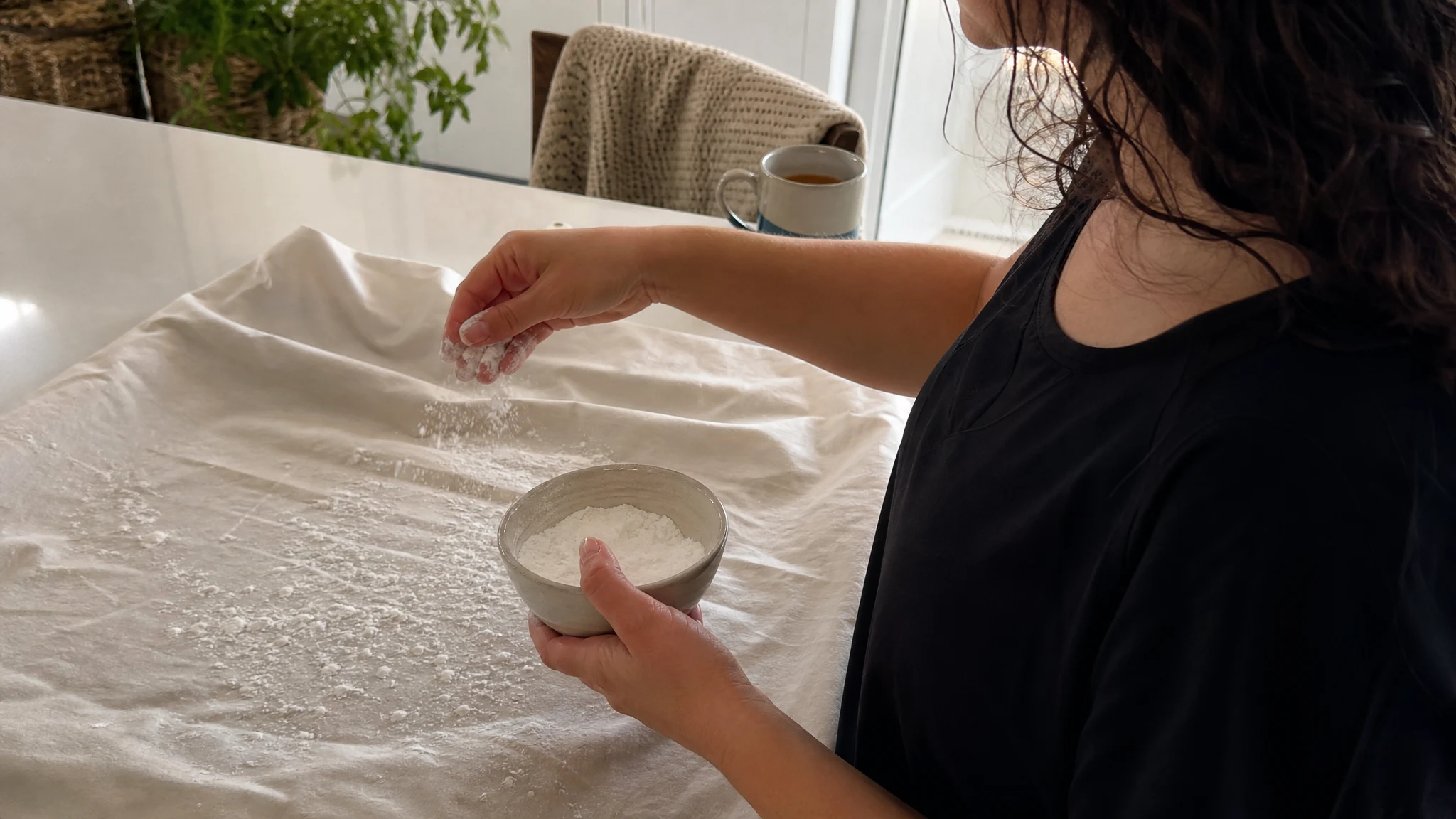
If the spill is a pool and not a smear, cover it with cornstarch. The NMSU guide lists cornstarch and cornmeal among the absorbents that soak stains up from fabric. How long to leave it is our judgment, not a number from the guide: we would give it half an hour, long enough for the powder to turn clumpy and look slightly damp, then brush it off, not wipe it. If you have no cornstarch, a few pieces of paper towel pressed on and replaced do the same job more slowly.
Dish soap does the heavy lifting
Oil does not dissolve in water, and detergent is what gets it to leave. NMSU lists liquid dishwashing detergent, shampoo and laundry detergent as the solvents for grease and oil, and Texas A&M adds that liquid detergents are the ones that work on oily soils. So squeeze a little dish soap straight onto the spot, work it in gently with your fingertip or an old toothbrush, and leave it for a while. A drop of the shampoo you already own works as well, which is a good thing to know when you are standing at the sink at eleven at night.
Then test first. NMSU says to try any method on an inside seam or hem, and Texas A&M explains why: a pretreatment can change a fabric's colour.
Let the care label pick the water
This is where people go wrong, and it is easy to get right. NMSU suggests the hottest water the fabric can take: very hot for cotton and linen, hand-hot for synthetics such as nylon, and only warm for wool. Texas A&M puts it more simply: use the hottest temperature the garment's care label recommends. Warm water loosens oil, and soap carries it away, so a cotton pillowcase or bath towel that says hot is happy to go hot, while a polyester shirt should stay at its label's temperature.
Wash the whole item, not just the spot, with your normal detergent. Texas A&M recommends laundering the whole thing after you pretreat.
If it is still there when the cycle ends
Do not reach for the dryer. Let the item air dry and look at it in daylight; fabric looks darker when wet, so a shadow on a damp pillowcase can fool you. If a mark is still there once it is dry, treat it again with dish soap and wash again. NMSU's fallback for a grease stain that washing does not lift is to let the item dry, sponge the spot with a grease solvent, and air the garment afterwards in a ventilated room. Stains that have been through a dryer are the hard ones, which is why the order matters.
Know when to hand it over
Silk, wool, and anything with a care label that reads dry clean only should go to a professional cleaner. Texas A&M says to take dry-clean-only garments to a professional, NMSU says to ask a dry cleaner for help, and Texas A&M also warns against chlorine bleach on silk, wool and spandex. Point out the stain when you drop it off, and say what it is: oil from a hair oil. A cleaner can only match the method to the stain if they know.
Fewer stains next time
Most of the work is prevention. If you leave oil in overnight, the overnight guide covers wrapping your hair in a satin bonnet or scarf and keeping an old towel over the pillow. A dedicated dark towel for oil days saves your good ones, and washing the oil out by shampooing dry hair first means less ends up on the towel in the first place. Our butter is the thicker form of our oil, less likely to drip or spill, which suits a pillow. And a little goes a long way; two or three drops through the ends is plenty for most people.
Fabric forgives a lot when you act early, so a stain is nothing to fear. Blot it, soap it, wash it at the right temperature, and let it air dry only once you are sure it has gone.
Natural Batana Oil
Honduran batana oil and batana butter, from a small bottle to bulk sizes.
From $12.99
Shop Batana Oil →Sources & Further Reading
- Removing Clothing Stains, Guide C-502, New Mexico State University Cooperative Extension Service
- Quick Stain Removal Guide, Texas A&M AgriLife Extension