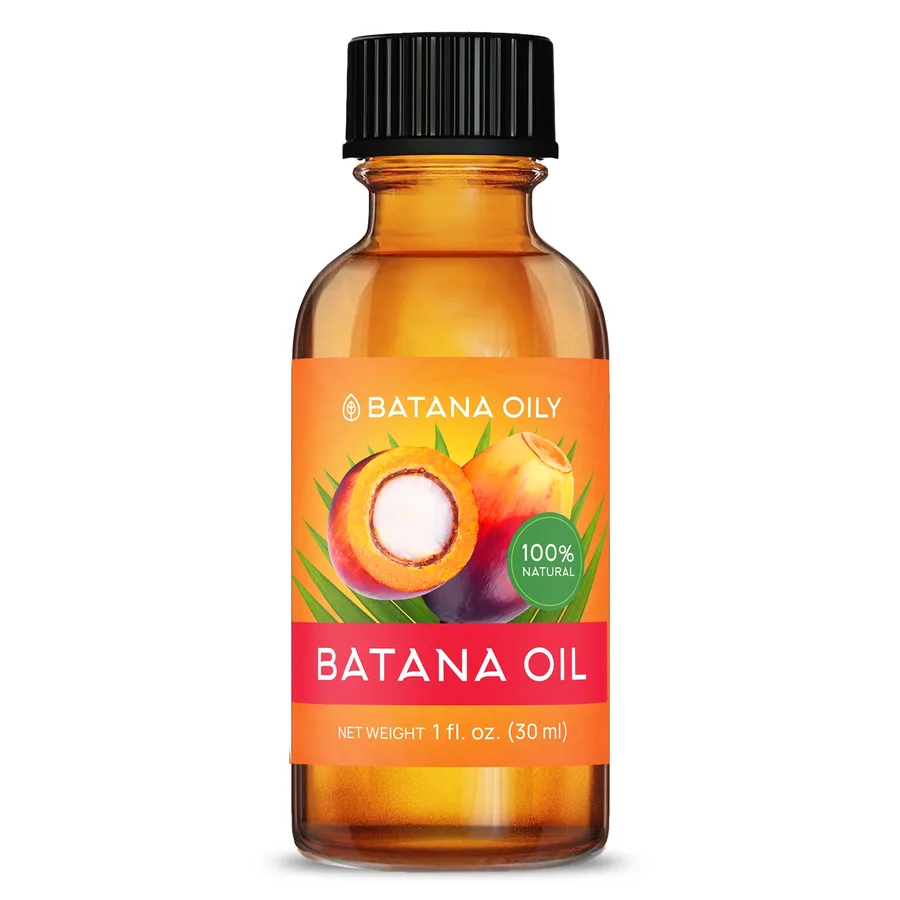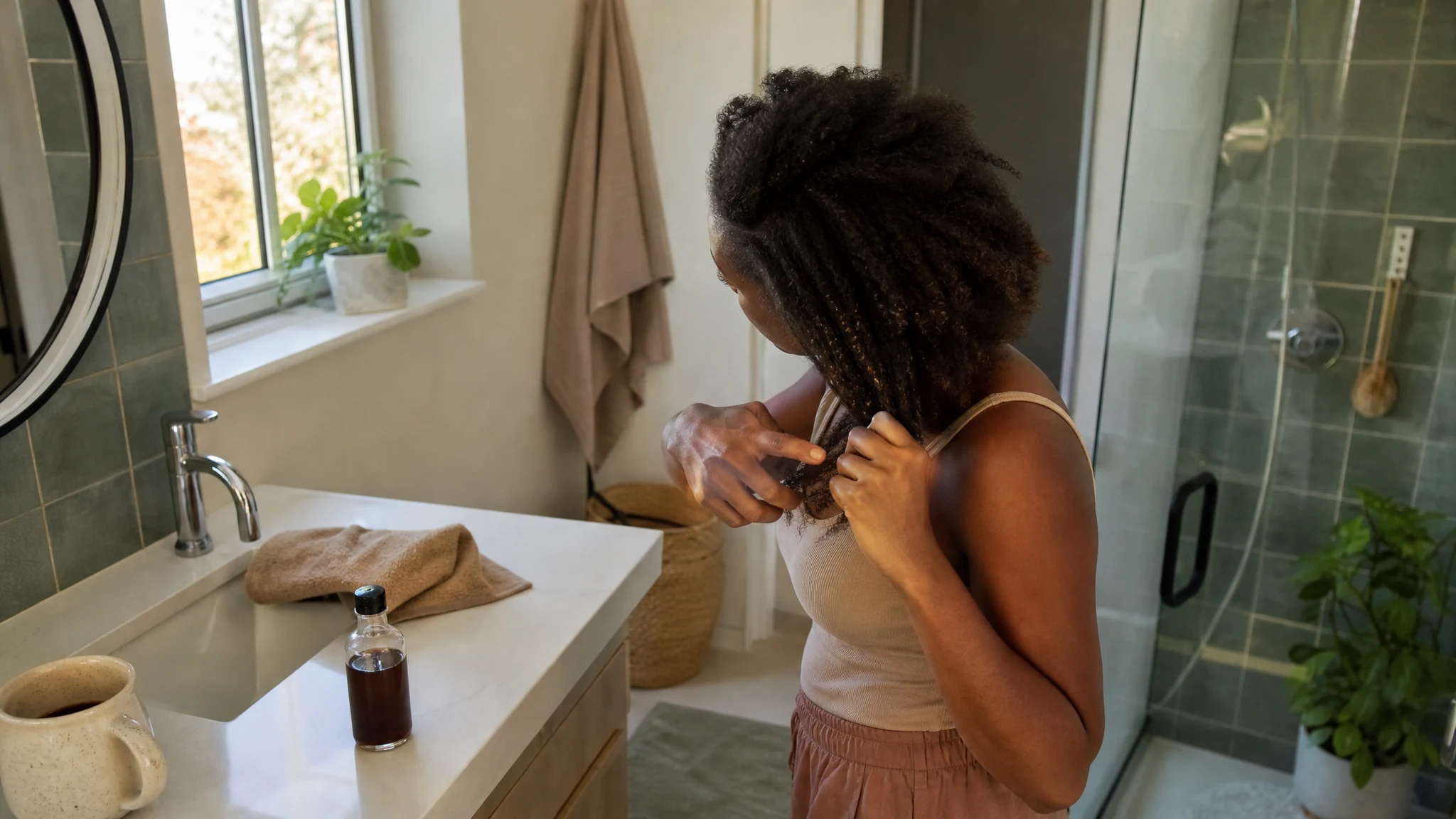
Batana Oil vs Jamaican Black Castor Oil: What Differs
Roasted beans make Jamaican black castor oil dark and thick. Here is what that does and does not change, and how it sits next to batana oil in a routine.
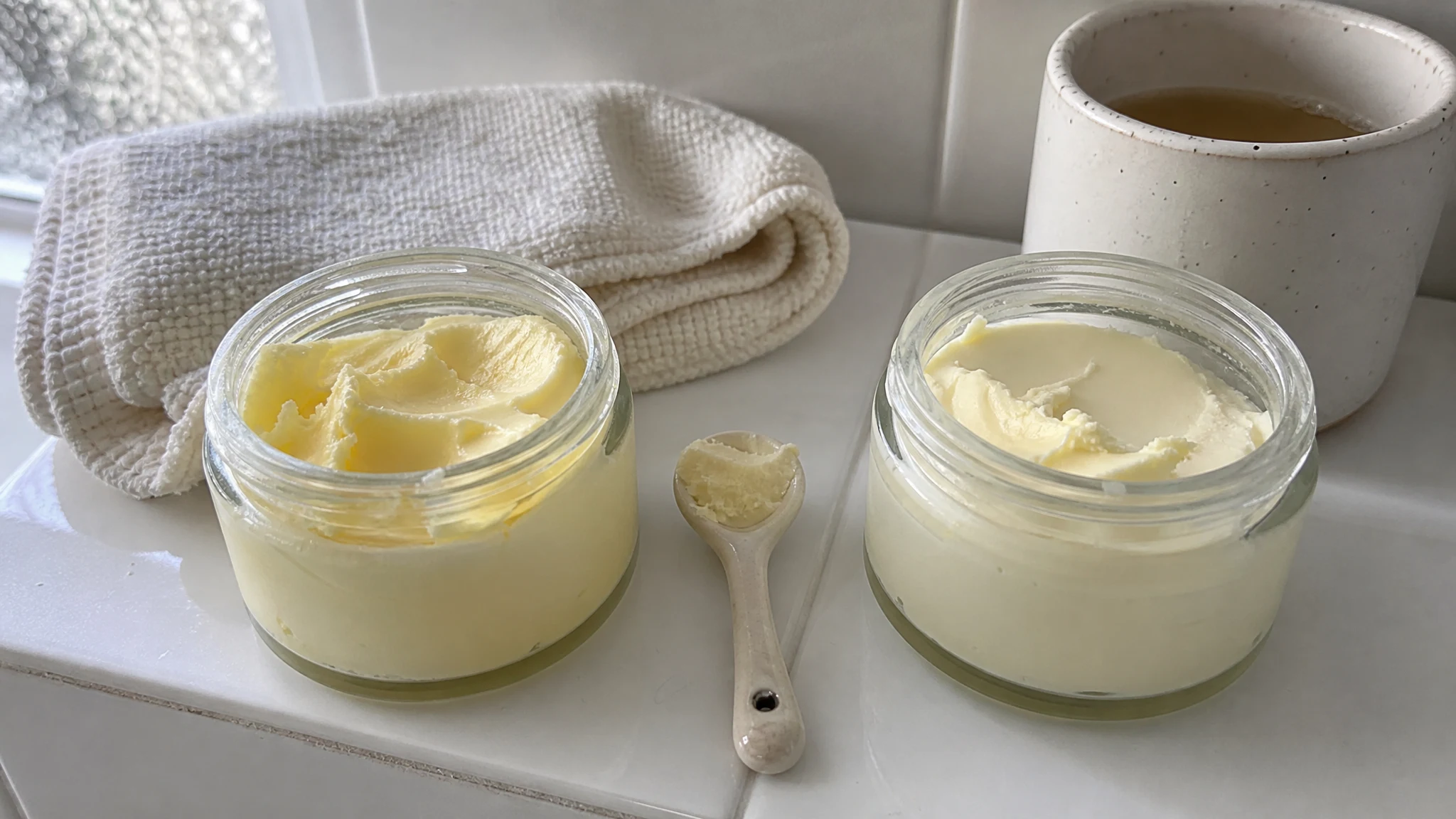
Batana Oil vs Shea Butter: Oil, Butter or Both?
Shea is firm and familiar, batana is earthy and palm-based. Here is how they differ, what each is best at, and why the best jar may hold both of them.

Batana Oil vs Sweet Almond Oil: Rich or Light?
Almond is the light everyday carrier and batana the richer oil. How they differ, why they pair well for fine hair, and what a nut allergy means here.
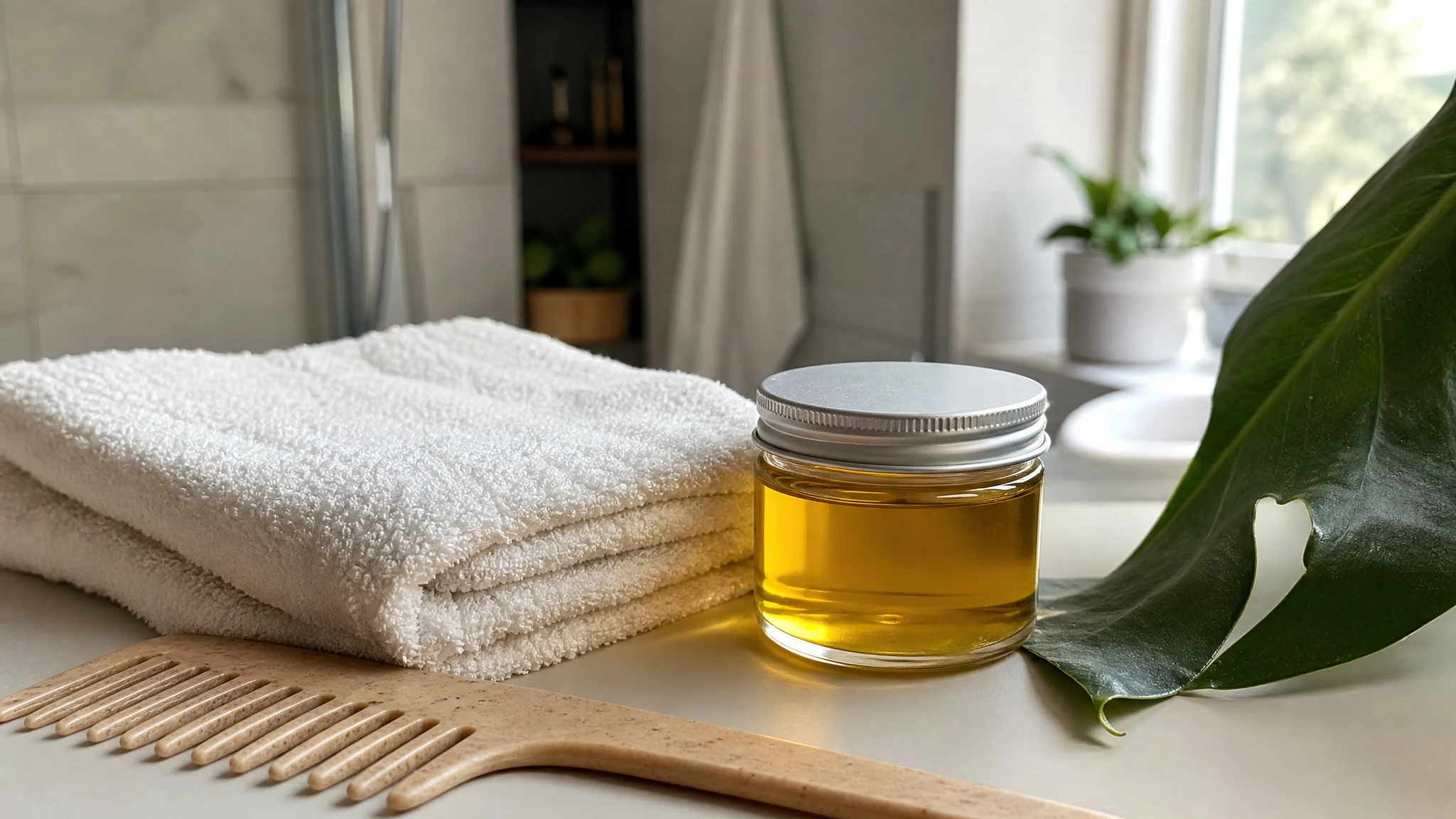
Batana Oil vs Olive Oil: Pantry Oil or Specialty Oil?
Is a specialty oil worth it when olive oil is in the pantry? What each is made of, how they wash out, and where the pantry bottle is the smarter choice.

Batana Oil vs Avocado Oil: Which Suits Dry Hair?
A dense palm oil beside a green fruit oil: how batana and avocado differ in composition, aroma and storage, and which one suits dry or low porosity hair.

Batana Oil vs Black Seed Oil: Two Very Different Jars
A palm nut and a spice seed: how batana oil and black seed oil differ in feel, scent and routine fit, and why black seed needs a careful patch test.

Batana Oil vs Jojoba Oil: A Liquid Wax and a Palm Oil
Jojoba is technically a liquid wax and batana a palm-nut oil. See how that changes weight and feel on hair and scalp, and when each one is the better pick.
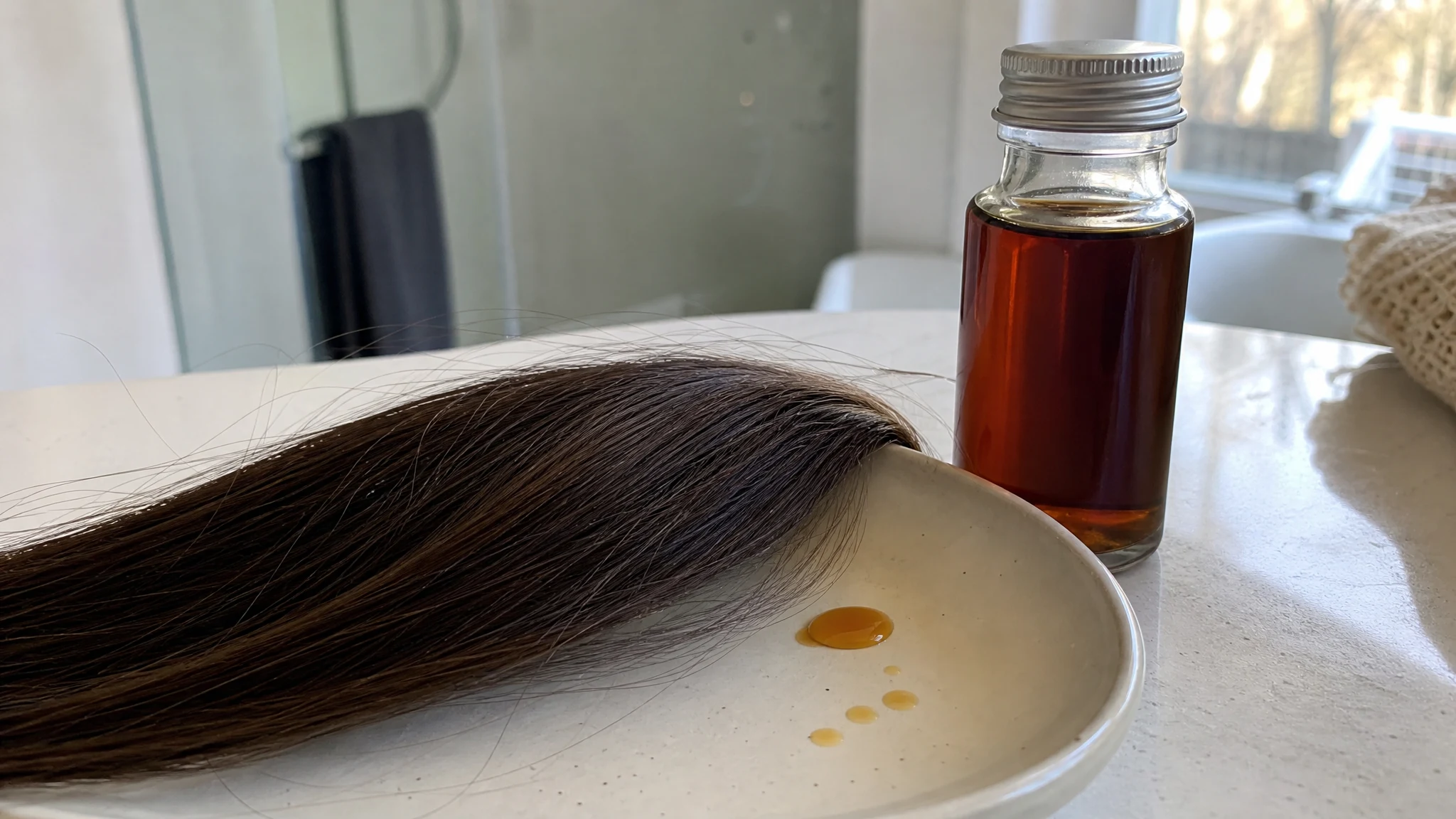
Batana Oil vs Argan Oil: Treatment or Finishing Oil?
Batana is a pre-wash treatment oil and argan a light finishing oil. Learn how they feel, how much to use, and when each one is the better pick.
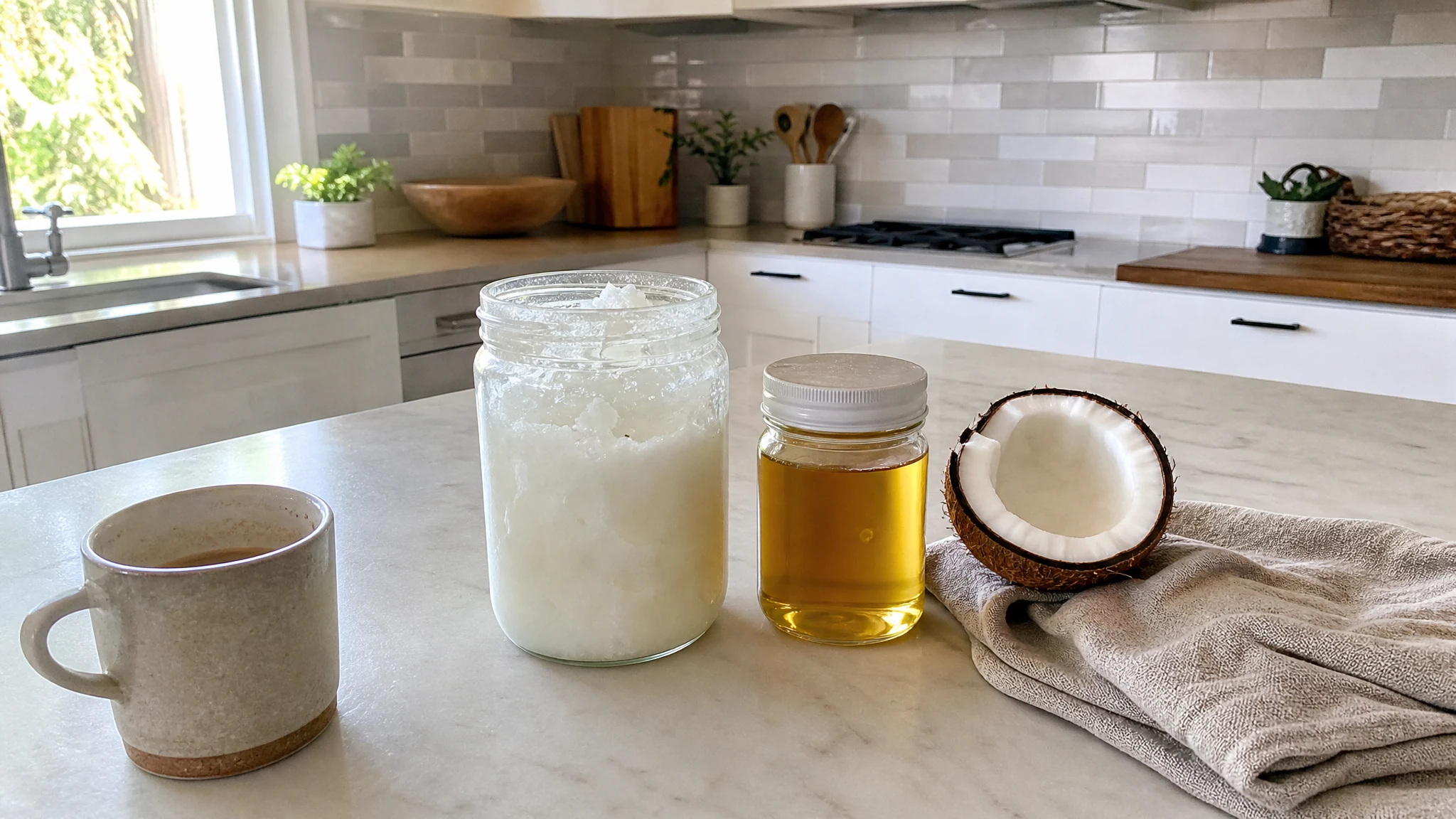
Batana Oil vs Coconut Oil: How They Differ on Hair
Coconut oil has a published study on hair; batana comes from the nut of the American oil palm. See how they compare and which suits your hair type.
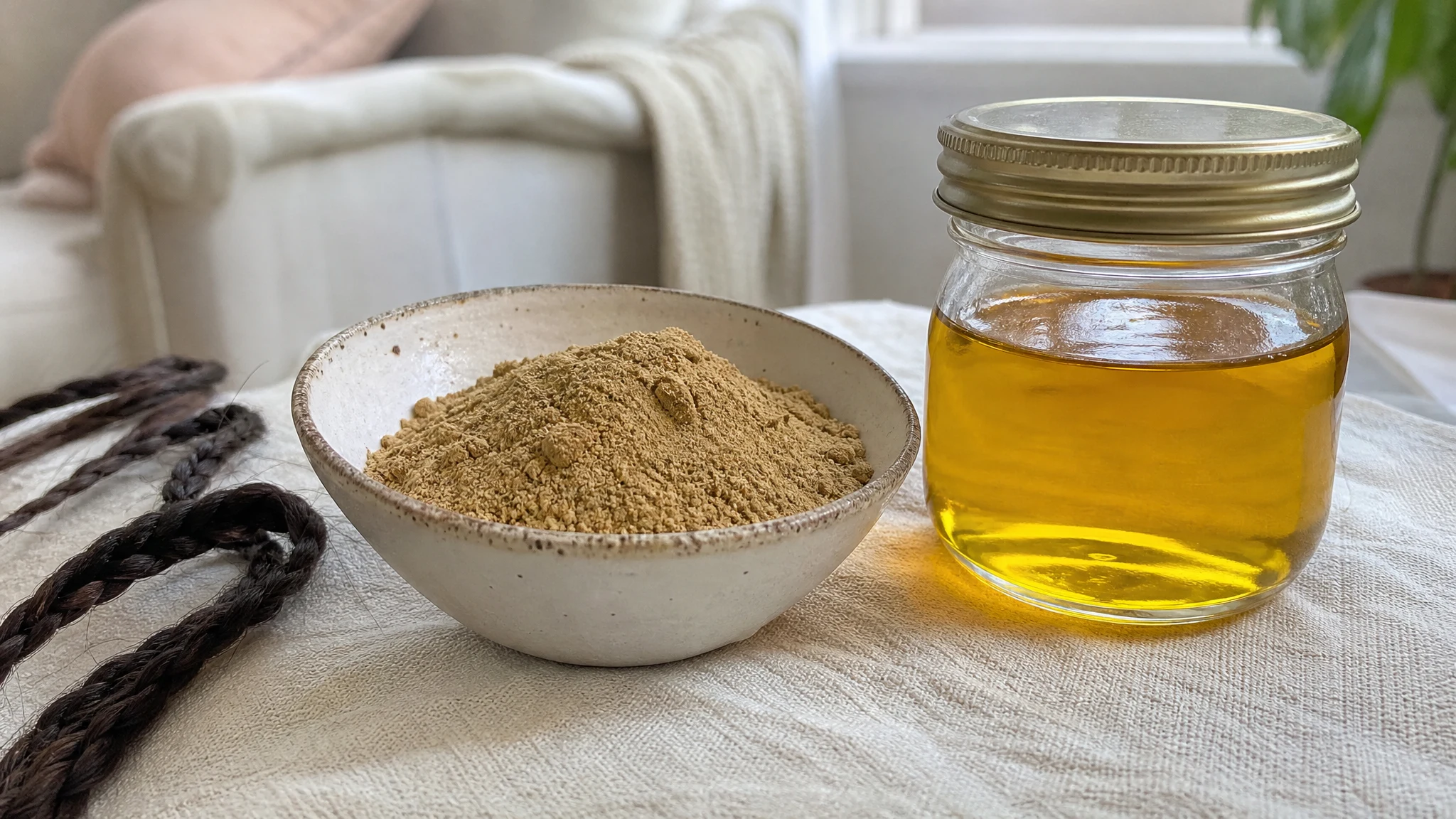
Batana Oil vs Chebe Powder: Two Traditions Compared
Chebe is a herbal powder from Chad and batana a palm-nut oil from Honduras. Learn how each tradition is used and how the two can sit together in a routine.
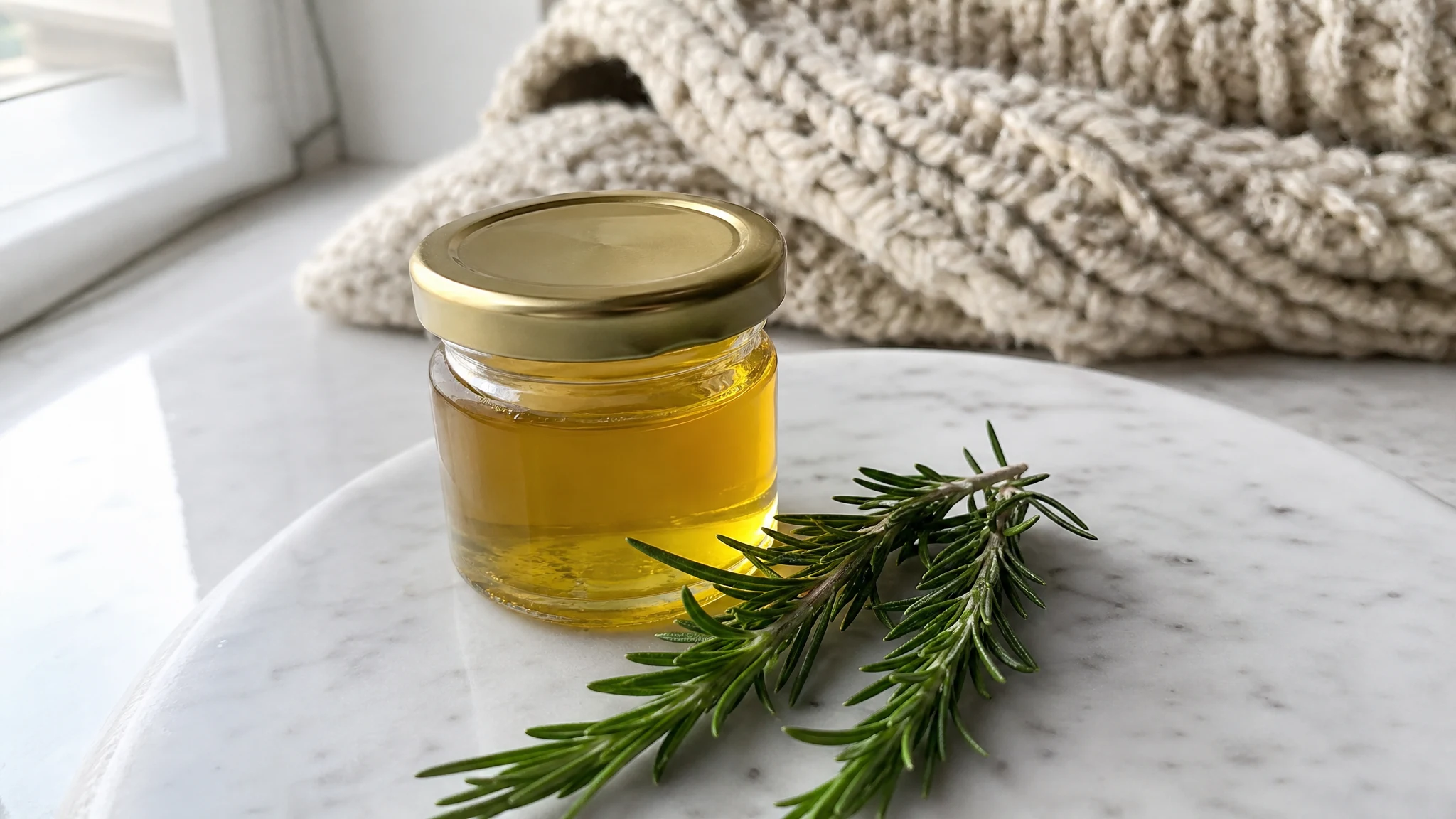
Batana Oil vs Rosemary Oil: Carrier or Essential Oil?
One is a carrier oil you can use by the teaspoon, the other an essential oil used by the drop. Learn how they differ and how they work together.
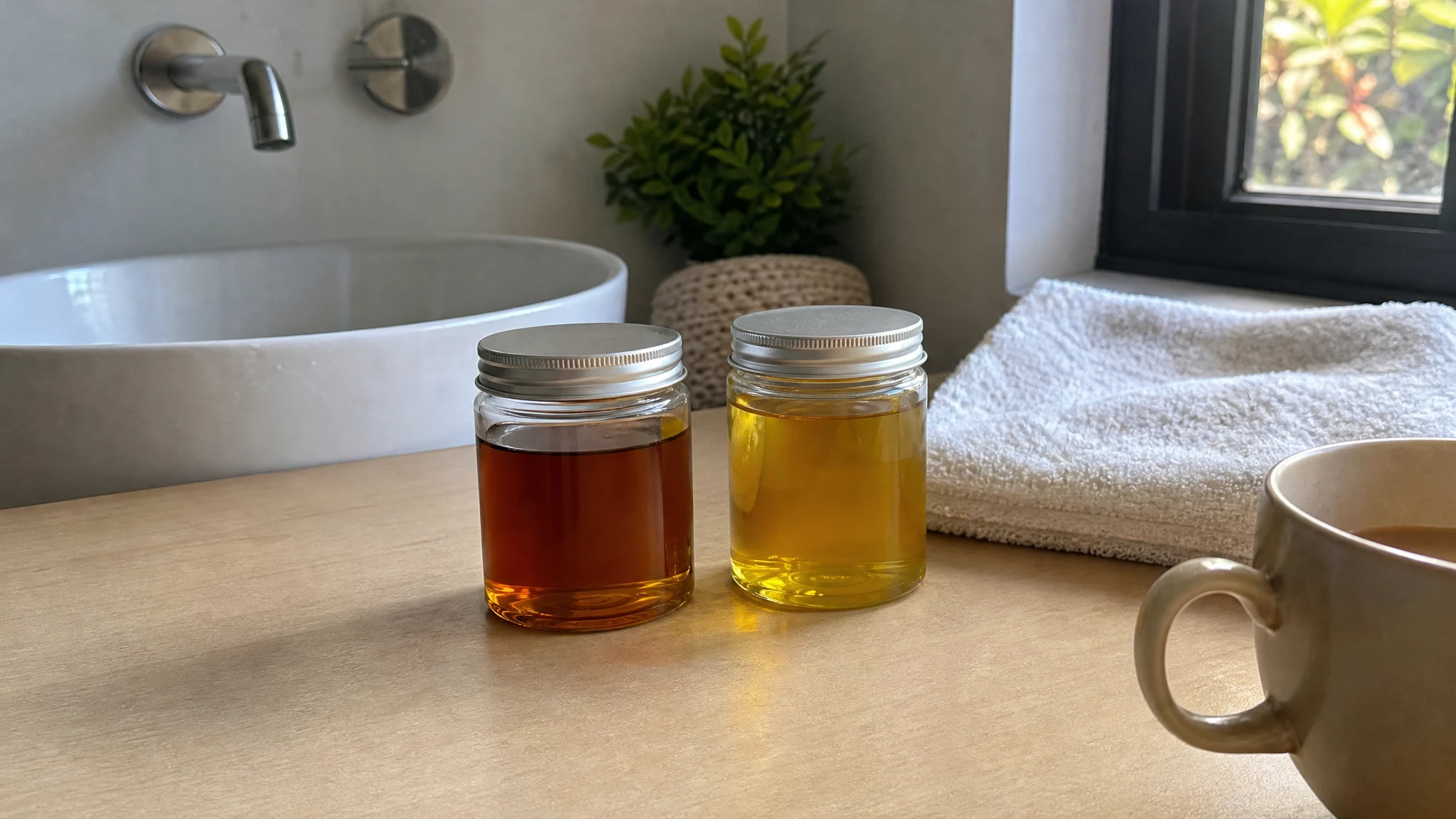
Batana Oil vs Castor Oil: Which Suits Your Hair?
Castor is thick and sticky, batana is a palm-nut oil from Honduras. See how they differ in feel and rinse-out, and which suits your hair type.