Batana Oil vs Sweet Almond Oil: Rich or Light?
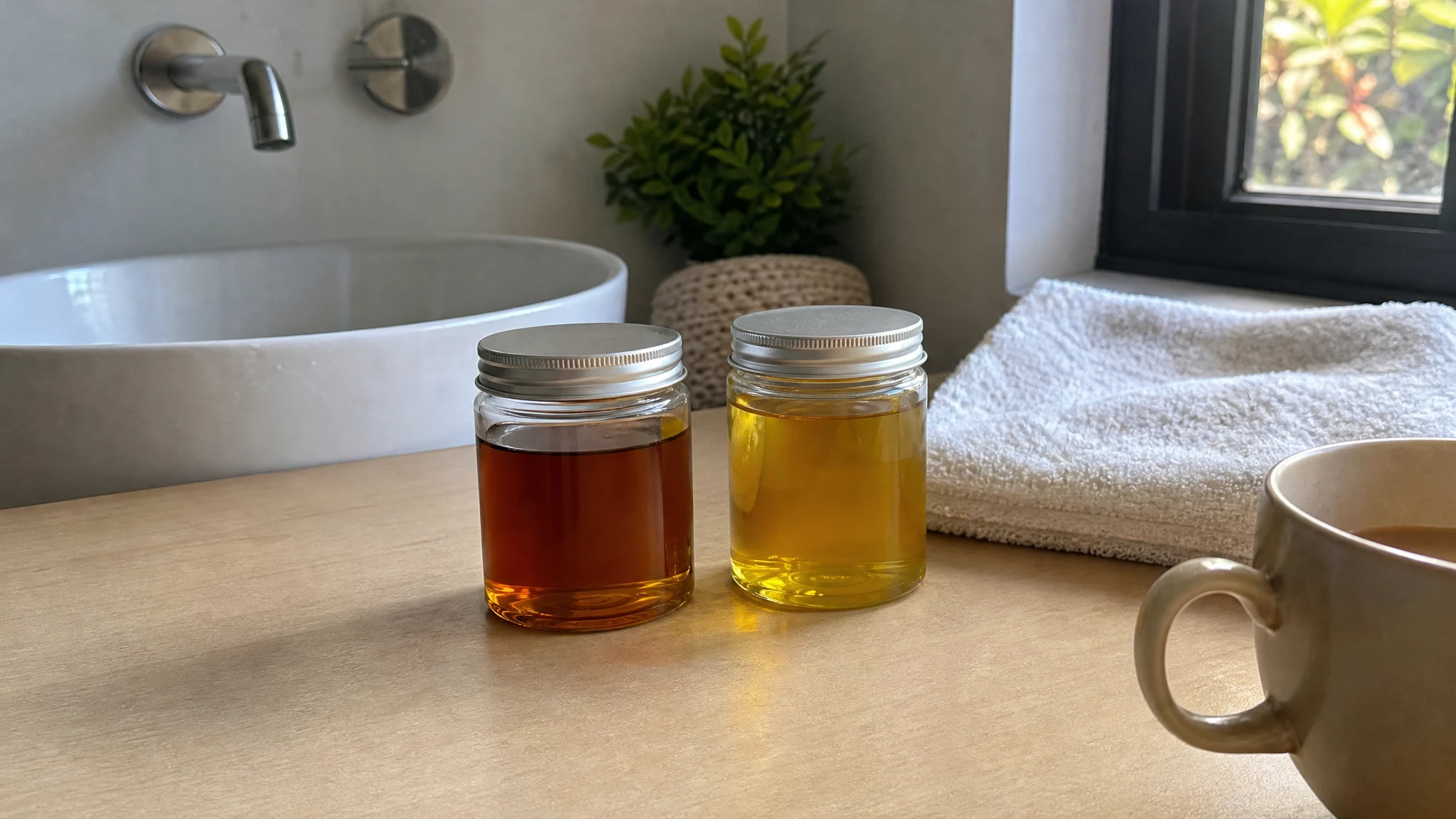
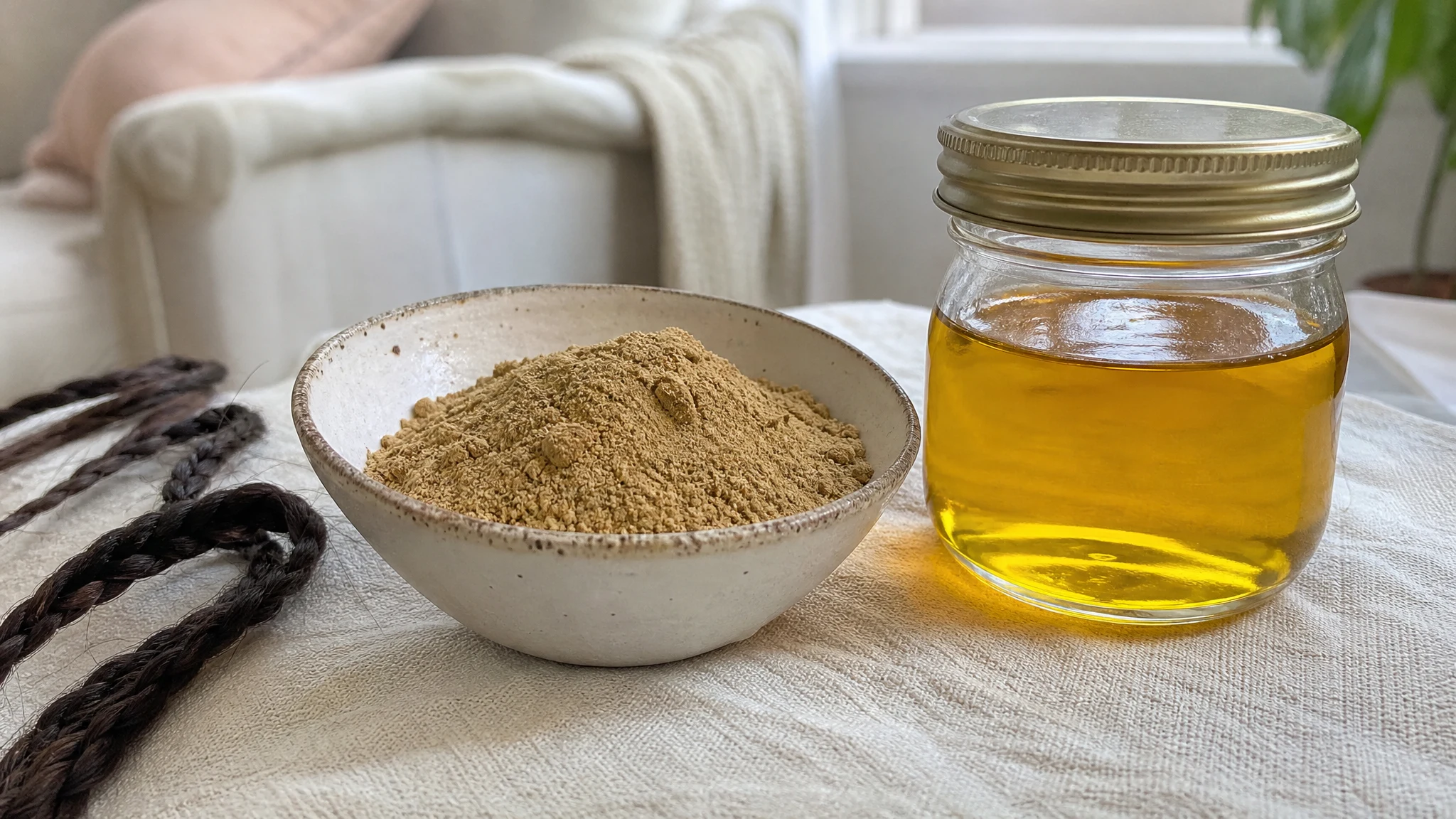
Almond oil is the oil most of us have already met: a light, quiet liquid from the craft supply shop that is sold for massage and for softening skin. Batana is a different kind of oil altogether, and the interesting part of this comparison is that the two work better as partners than as rivals.
Two oils, two different builds
Sweet almond oil is mostly oleic acid, roughly 60 to 75 percent of its fatty acids, with linoleic acid making up most of the rest at around 15 to 30 percent. Both are long-chain unsaturated fatty acids, and that composition is why almond oil is the thin, free-flowing sort. Batana comes from the nuts of the American oil palm, Elaeis oleifera, and in a 2017 analysis the main fatty acids in the kernels of that species were lauric, myristic and oleic acid. Lauric and myristic are shorter, saturated fatty acids, a different character from almond's. We do not publish a profile for our own jar, so this compares the plants, not a bottle.
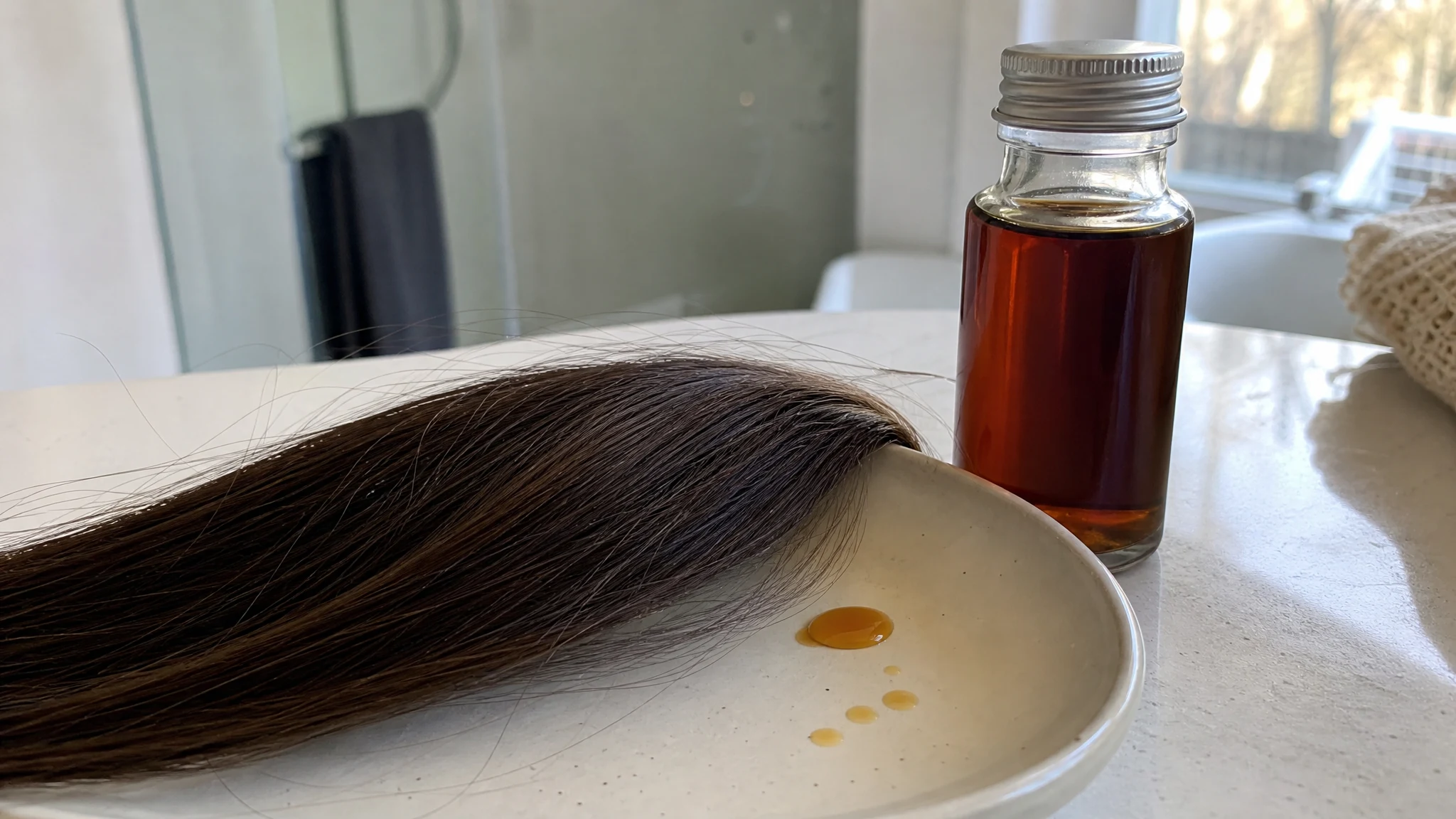
Our read, reasoning from those compositions, is that almond belongs on the light end of the shelf and batana on the rich end. We think of batana as the oil you work through hair ahead of a wash, and our butter is the thicker form of it. Almond is closer to a finishing touch.
How they feel, smell and cost
A drop or two of almond oil smoothed over dry ends gives a soft sheen and then gets out of the way. Its aroma is mild, so it will not compete with your shampoo or your perfume. Our batana oil has an earthy aroma, which some people love and some would rather not wear all day, so it is worth deciding which camp you are in.
On cost, we will keep it qualitative. Almond is a widely grown orchard crop pressed on a large scale. The American oil palm is rarely planted, grows in managed forest rather than orchards, and gives significantly less oil than the African oil palm, according to a 2020 review of palm oils. A rarer, more labour-led oil costs more per ounce, which is the best argument for stretching it.
Thinning batana with almond
Fine, straight hair carries its own scalp oil down the strand easily, so it shows added oil sooner than any other hair type. Our fine, straight hair guide keeps batana to a single drop for that reason. If a single drop of a rich oil is hard to dose, a thinner blend is easier. This is plain arithmetic, not a recipe with a promised result:
- 10 g of batana oil and 20 g of almond oil make 30 g that is one third batana.
- 5 g of batana oil and 25 g of almond oil make 30 g that is one sixth batana, a gentler blend still.
Weigh in grams rather than spooning, because a spoon measures how full it is and not how much oil is in it. Use a few drops of the blend on the ends before shampooing, and keep it water-free and in a small, closed jar, as our DIY recipes explain. For how it compares with the other oils on the shelf, our hair oil overview lines them up.
If anyone has a nut allergy
This is the one place where the two oils are not interchangeable in a household. Almond is a tree nut, and the allergists we read draw a line between refined and unrefined nut oils. The American Academy of Allergy, Asthma and Immunology notes that refined nut oils are made with chemical agents or high heat and generally lack the proteins that cause reactions, while unrefined, cold-pressed nut oils keep them, and natural-positioned cosmetics sometimes use those. Allergy UK names cold-pressed almond oil specifically as one that people allergic to that nut should avoid. The American Academy of Pediatrics says families of children with nut or seed allergies should generally avoid lotions, hair products and massage oils made with nut oils.
Our advice is simple: if there is a nut allergy in your home, leave almond out and ask your allergist, who can also tell you whether a given product's oil is refined. Because we describe batana oil as coming from the nuts of a palm, show the botanical name, Elaeis oleifera, to that allergist too instead of guessing from the word nut. Whichever oil you choose, patch test before first use and avoid your eyes.
We do not sell almond oil, so you will find it at a craft supply shop, pharmacy or grocery store. Our oil and butter are on the shop page if you would like to try the richer side of the comparison.
Used together, the light oil keeps the dose gentle and the rich one gives it something to say.
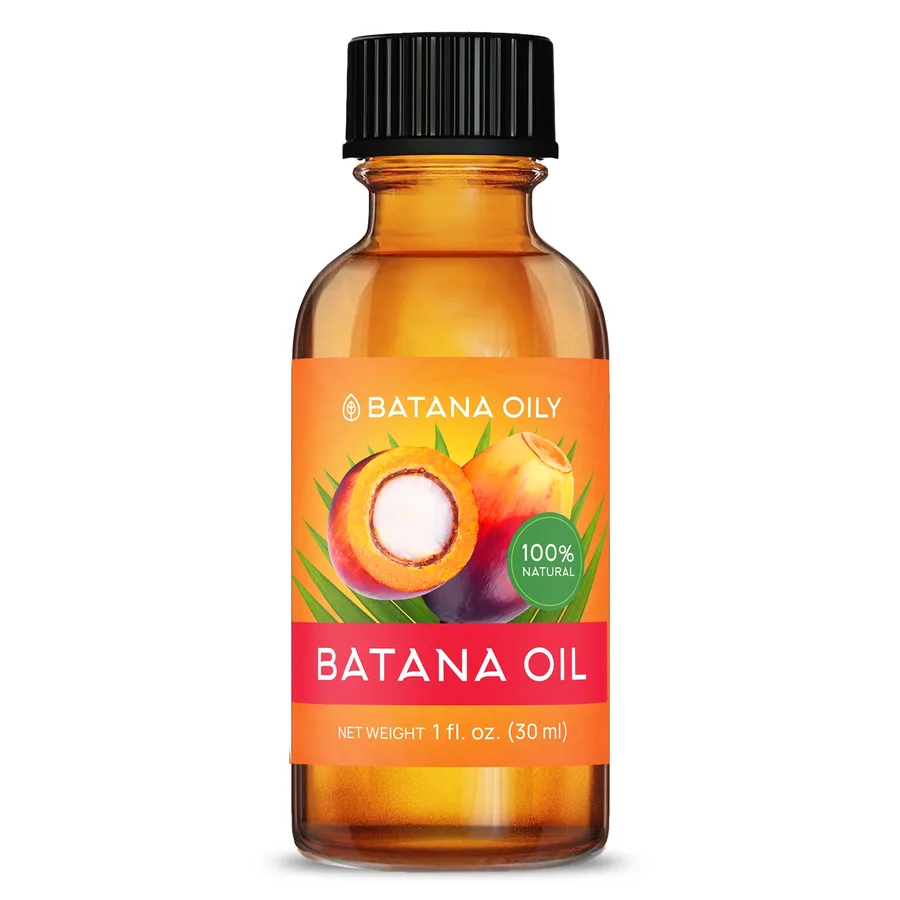
Natural Batana Oil
Honduran batana oil and batana butter, from a small bottle to bulk sizes.
From $12.99
Shop Batana Oil →Sources & Further Reading
- Roasting Time Shapes Quality Attributes, Aroma Formation and Oxidative Lipid Remodeling in Almond Oil (Foods, 2026), for almond oil's oleic and linoleic acid ranges.
- Characterization of Mesocarp and Kernel Lipids from Elaeis guineensis Jacq., Elaeis oleifera [Kunth] Cortés, and Their Interspecific Hybrids (Journal of Agricultural and Food Chemistry, 2017).
- Current Knowledge on Interspecific Hybrid Palm Oils as Food and Food Ingredient (Foods, 2020).
- Hair Cosmetics: An Overview (International Journal of Trichology, 2015), for how fine, straight hair carries sebum.
- Food allergy: nut oils in topical products (American Academy of Allergy, Asthma and Immunology).
- Tree Nut Allergy (Allergy UK).
- How to Choose Safer Personal Care Products: Tips for Families (American Academy of Pediatrics, HealthyChildren.org).