Batana Oil and Peppermint Oil: Blend It by the Drop
Peppermint announces itself before you have finished screwing the cap back on: a cool, bright scent that sits oddly well beside batana's low, earthy aroma. It is also the essential oil where a single extra drop changes the whole experience, which makes it a good one to learn to measure.
Why peppermint rewards a light hand
The cool feeling people love comes from menthol, the main aromatic compound in peppermint oil. Menthol is the reason regulators write it into guidance by name: the German Federal Institute for Risk Assessment recommends that products which stay on the skin contain no more than 1 percent menthol, and a higher figure only for rinse-off products. We treat that as a ceiling to stay well beneath. Because menthol is only part of peppermint oil, a blend with 1 percent peppermint oil necessarily holds less than 1 percent menthol. That is simple arithmetic, not a measurement of any particular bottle, but it is why we stop at 1 percent for anything that stays on the scalp or hair.
Tisserand Institute's dilution article gives a useful frame: 0.2 to 1 percent for skin that is sensitive, 0.5 to 1.2 percent for the face, and 1 to 3 percent for body oils. A scalp that is going to feel a cooling tingle is closer to the first two than the third, so we start at the bottom of that range, and in practice that means counting single drops.
The drops, worked out
This follows the same arithmetic as our rosemary blend. It assumes about 20 drops to a millilitre, a rule of thumb that varies from bottle to bottle (Tisserand notes that drop conversions are always approximate, because no two drops are the same).
| Batana oil in the bottle | 0.5% | 1% |
|---|---|---|
| 10 ml (2 teaspoons) | 1 drop | 2 drops |
| 30 ml (1 fluid ounce) | 3 drops | 6 drops |
| 60 ml (2 fluid ounces) | 6 drops | 12 drops |
For a first bottle, one drop of peppermint in 10 ml of batana oil is all we would do. Roll the bottle between your palms, smell it, and wait a day before deciding whether it needs a second. Peppermint is far easier to add than to take out. Write the date and the drop count on the bottle so you can repeat what you liked, or go one drop lighter next time.
Making it, and where to find peppermint
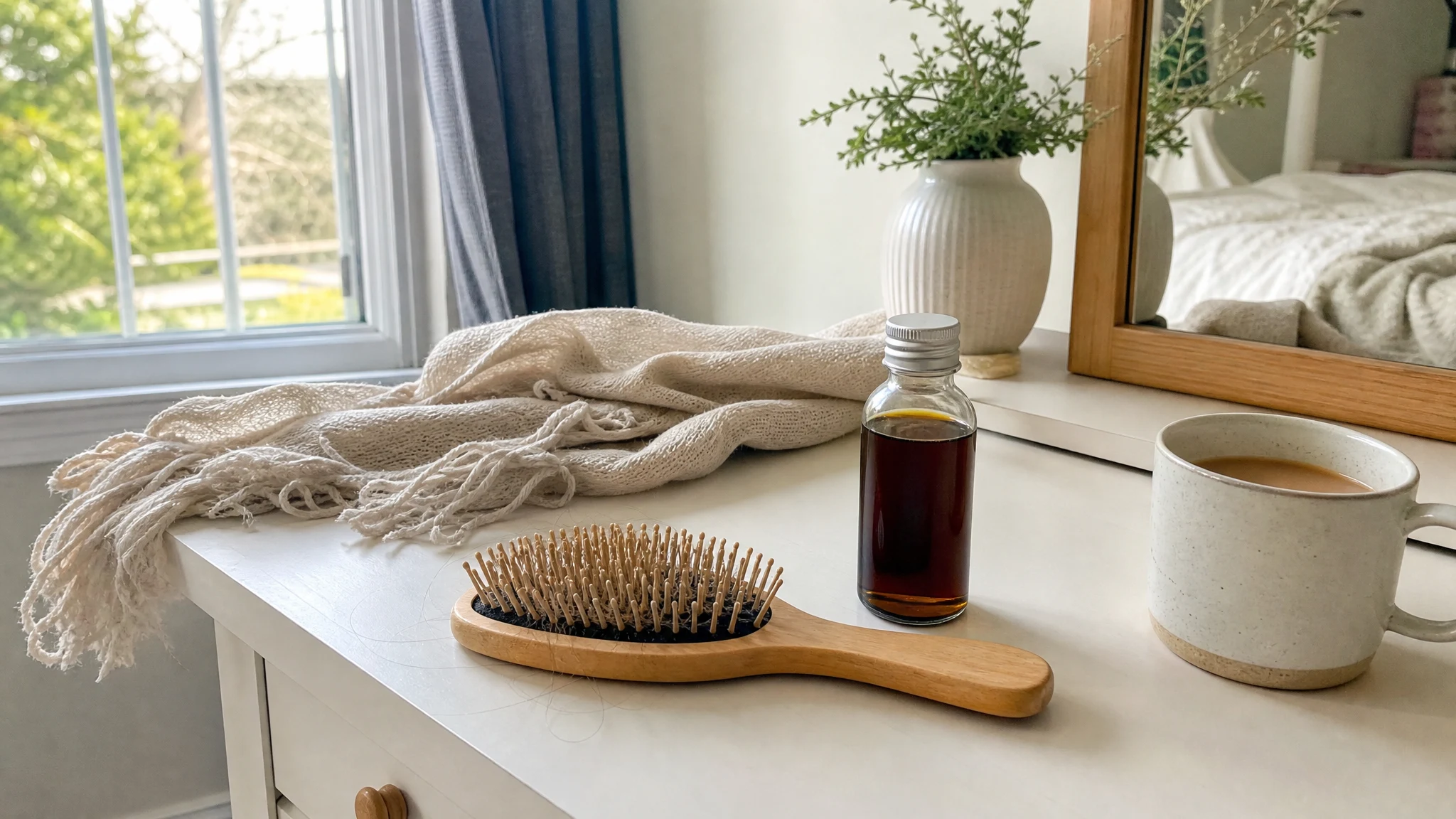
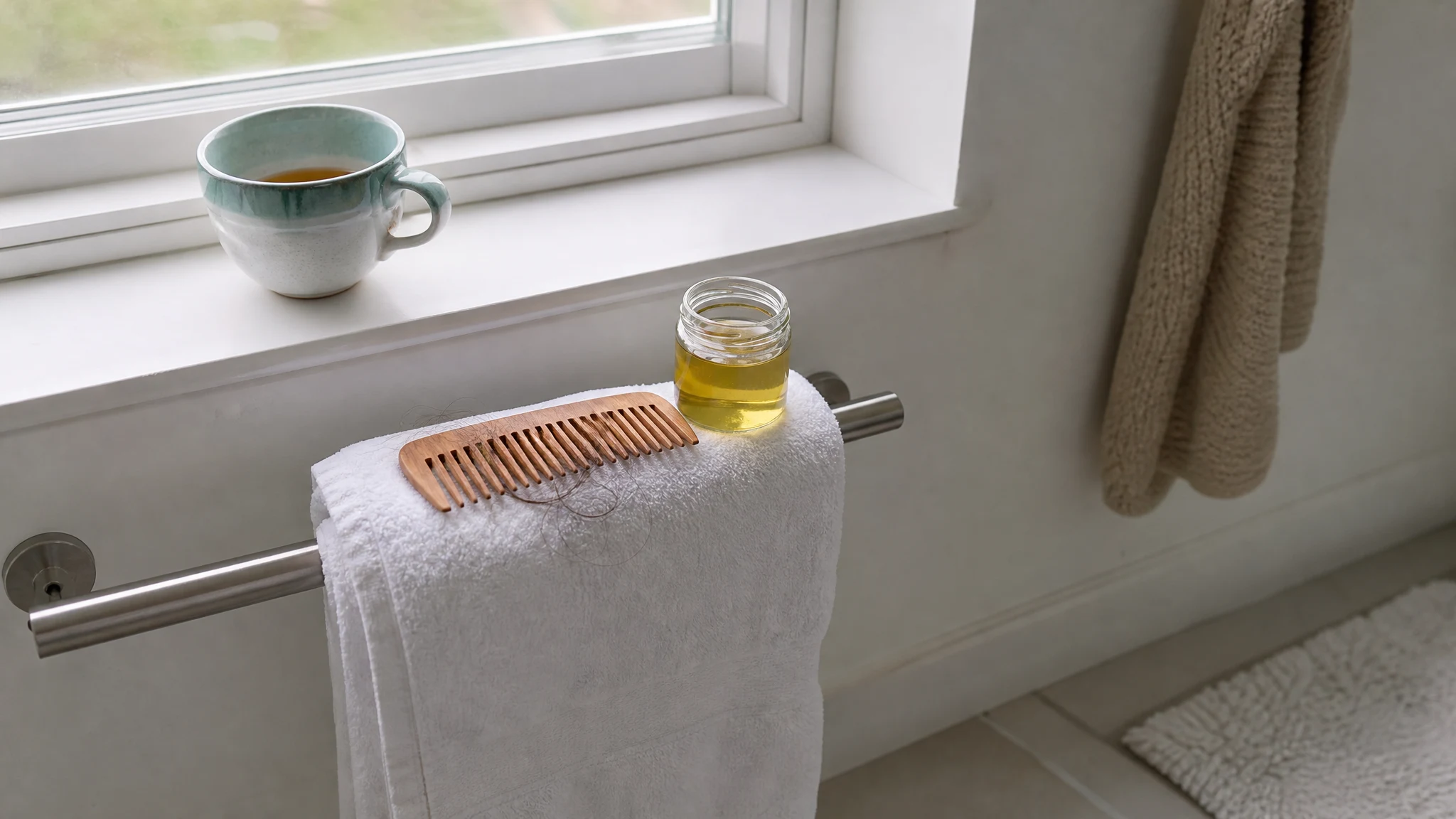
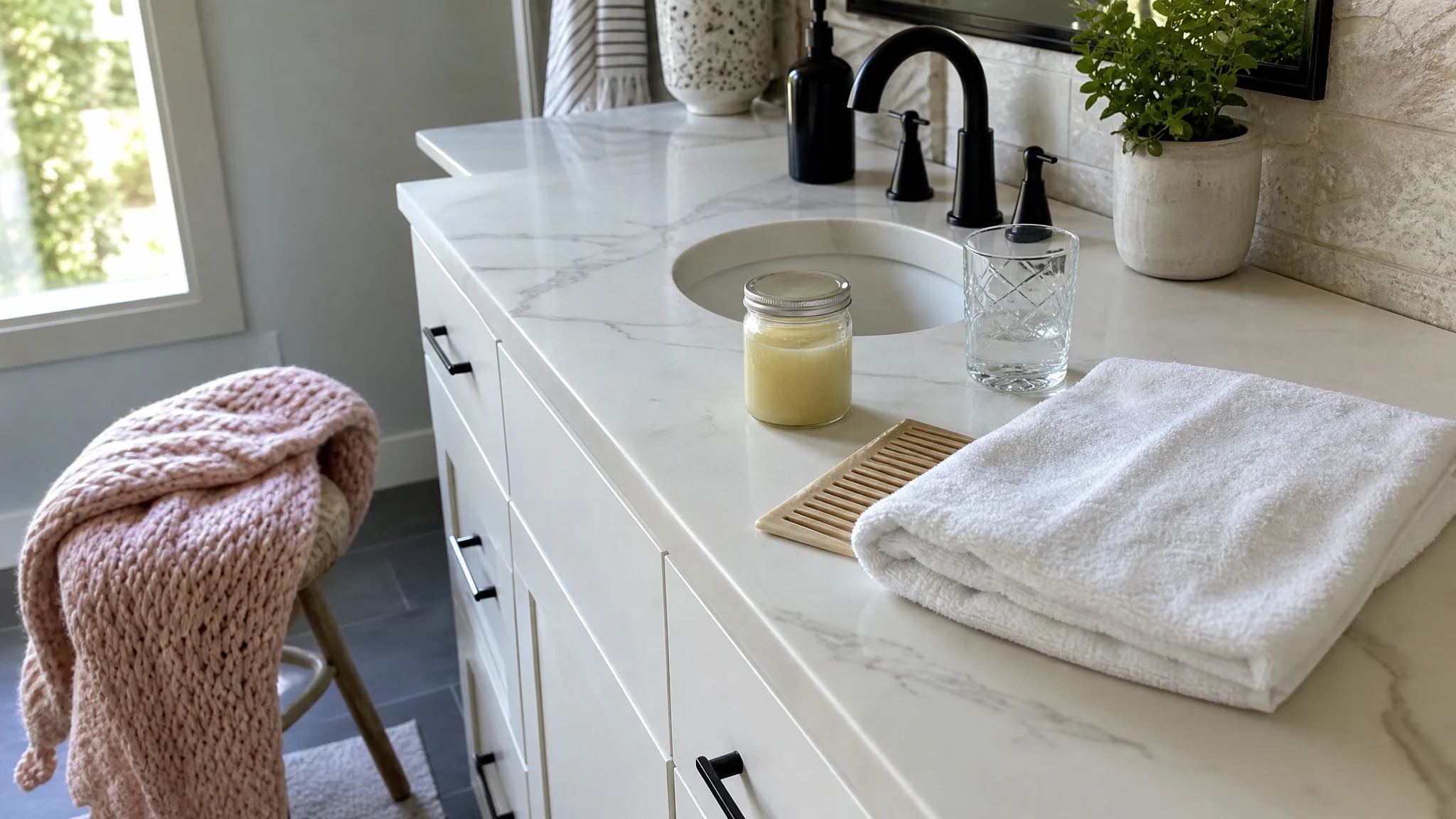
Start with our Natural Batana Oil in a clean, dry bottle with a plain cap, add the drops, cap and roll. We say it can be mixed with essential oils or added by the drop. Our Natural Batana Butter has the same uses in a thicker consistency, so if you would rather blend into the butter, stir the drops in thoroughly so the scent spreads evenly instead of pooling.
We do not sell peppermint oil. A craft supply shop or a pharmacy with an essential oil shelf will have it; look for the plant's name, Mentha piperita, on the bottle and a maker who prints it.
If you are wondering what else sits well with batana, our scent pairings guide is the place to browse.
Who should leave it out
Peppermint is lovely, but not for everyone.
- Babies and young children. The German Federal Institute for Risk Assessment advises special caution with peppermint oil (menthol) for children under three. Robert Tisserand's guidance for oils high in menthol is not to apply them to or near the face of infants or children, and Hana Tisserand has noted that peppermint can potentially slow breathing in small children. We would keep peppermint out of anything used on or around little ones. Our children and batana oil post covers the oil on its own, and your pediatrician is the person to ask about essential oils at all.
- Pregnancy and nursing. Tisserand advises avoiding essential oils altogether in the first trimester. If you are pregnant or nursing, ask your doctor or midwife before you use any essential oil, peppermint included.
- Sensitive scalps. The FDA lists peppermint among the essential oils that can cause allergic reactions in some people, and anyone can develop a sensitivity at any age. If your scalp is easily irritated, a fragrance-free routine may suit you better, and a dermatologist is the right person for anything that itches, flakes or burns.
- Homes with pets. We cannot give an assurance for animals. Our post on batana oil and pets explains what to ask your vet, and we would keep any essential oil blend away from them.
Patch test first, then keep it away from your eyes
Skin and hair vary from person to person, so patch test before first use and avoid eye contact; the blend is for external use only. The American Academy of Dermatology suggests testing a quarter-sized spot on the inner forearm with the amount you would normally use, twice a day for 7 to 10 days. For a stronger-smelling blend like this one we would follow it all the way through, and our patch test guide walks through it. Wash your hands after applying, before you touch your face.
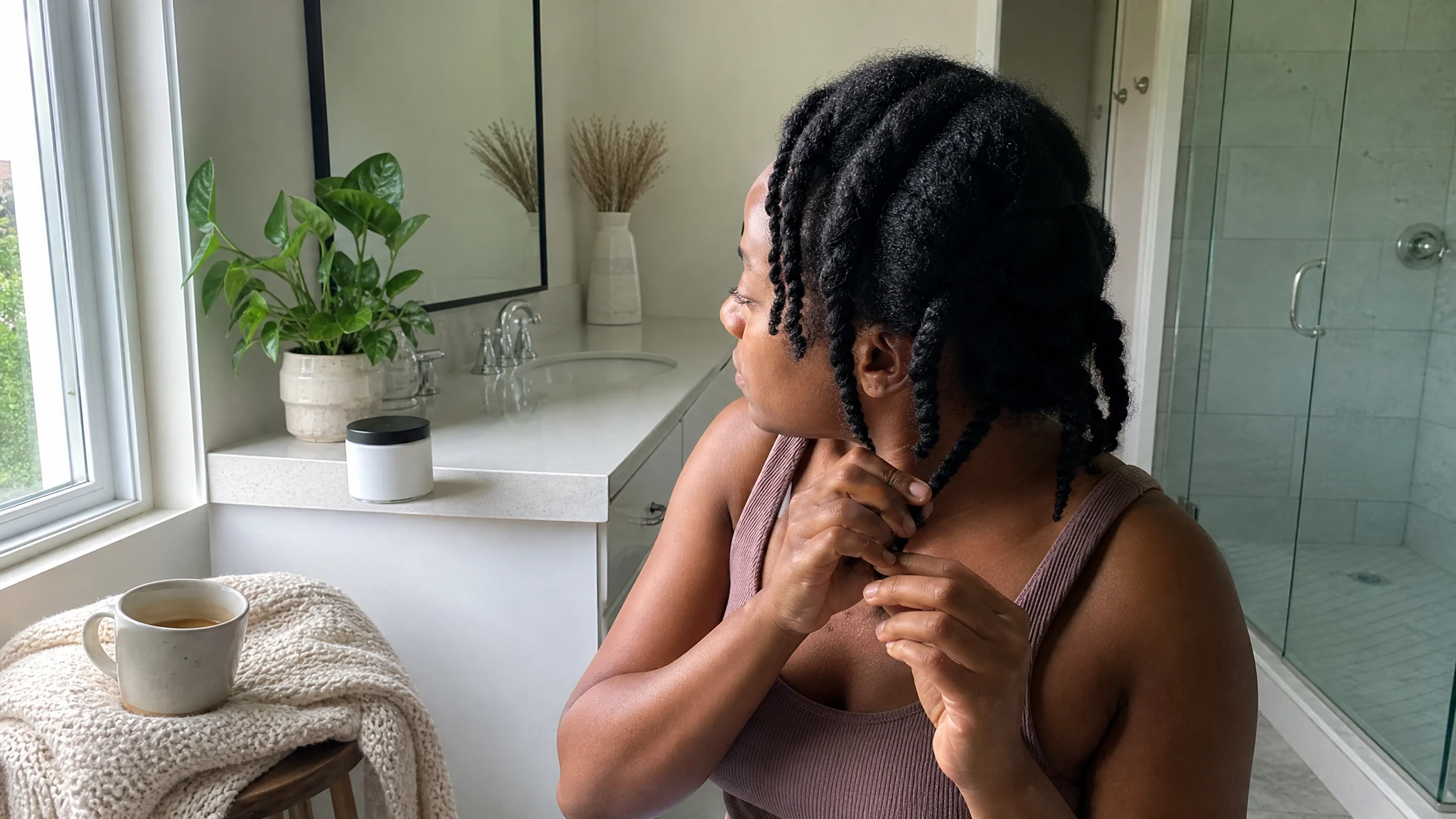
When you do put it on, a little goes a long way: warm a few drops between your palms and smooth them over the lengths and ends, which is where most of us want that soft, glossy finish anyway. A bottle that smells fresh and cool, and gets used up in a few weeks, is exactly what this blend is for.
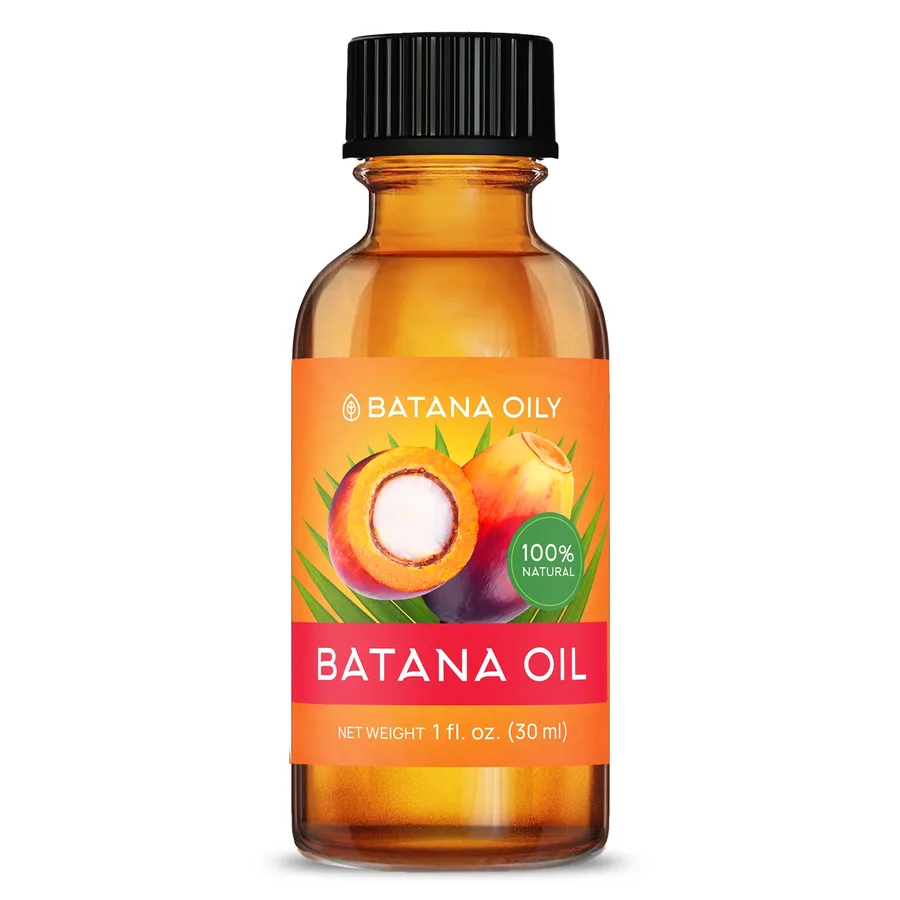
Natural Batana Oil
Honduran batana oil and batana butter, from a small bottle to bulk sizes.
From $12.99
Shop Batana Oil →Sources & Further Reading
- Dilution for essential oils, Tisserand Institute
- Peppermint and Eucalyptus for children, Tisserand Institute
- Frequently Asked Questions about the use of essential oils, BfR FAQs, German Federal Institute for Risk Assessment, 28 February 2008
- Allergens in Cosmetics, U.S. Food and Drug Administration
- How to test skin care products, American Academy of Dermatology
- Essential Oils in Pregnancy & Early Motherhood, Tisserand