Why Batana Oil Goes Grainy or Solid, and What to Do
You reach for the jar on a cold morning and the oil has turned into something else: stiff, cloudy, maybe a little sandy when you press a finger into it. Before you decide it has gone bad, take a breath. In nearly every case a palm-family oil that sets or turns grainy is doing exactly what its chemistry says it should do when the room cools.
Two kinds of fat in one jar
An oil is not one substance. It is a crowd of fat molecules, some that stay liquid at ordinary temperatures and some, built mostly from saturated fatty acids, that freeze at a higher temperature. Palm oils sit close to the middle of that range: the palm literature describes saturated and unsaturated fatty acids as being present in almost equal amounts in ordinary palm oil, a balance that gives palm oils structure and slow crystallization properties. Batana oil comes from a close relative of that palm, Elaeis oleifera, and a mix like this has two moods.
When the room is warm, everything stays dissolved together. When it cools, the high-melting fats reach their setting point first and start to crystallize, while the liquid part stays liquid. A review of how lipids crystallize puts it neatly: the high-melting molecules lead the process, and the liquid oil gets in the way of it. The result depends on how fast the cooling happens. Quick cooling gives lots of tiny crystals and a smooth, firm set. Slow cooling, or a jar that warms and cools through the day, gives fewer, larger crystals that you can feel as grains.
The same thing is done on purpose in the palm industry. In one fractionation study, palm oil was cooled in a controlled programme and the slurry was separated into a liquid olein and a firmer stearin at temperatures between 4 and 15 °C. If a factory can pull one oil apart into soft and hard portions by lowering the temperature, you can see why a jar in a cold kitchen might separate a little by itself.
Why it looks different from day to day
The same jar can be fluid on Monday and stiff on Thursday, because what matters is the room, not the oil. A sunny shelf, a drafty windowsill, a warm bathroom and a cold car all produce different results. Grainy butters are the classic example in the cosmetic world, and shea butter is the one most people have met: a supplier of shea explains its grainy look as fat crystals that form when the butter cools slowly or goes through temperature swings. Batana belongs in the same family of behaviour, although the exact point where it sets depends on the oil itself, and we would rather not guess about the oil in your hands.
That is also why our Natural Batana Butter is described as the thicker form of our oil: the same uses, a thicker consistency, and less likely to drip or spill. If you want something that holds its shape in the jar, the butter is the format for it, and if you like to pour or add drops, our Natural Batana Oil is the one to reach for.
Warming it back, gently
Because crystals are a physical state, not damage, they melt again with warmth. Two easy ways, both based on simple reasoning about how fats melt:
- Warm room, patience. Move the jar somewhere comfortably warm for a while, and give it a gentle swirl once it softens.
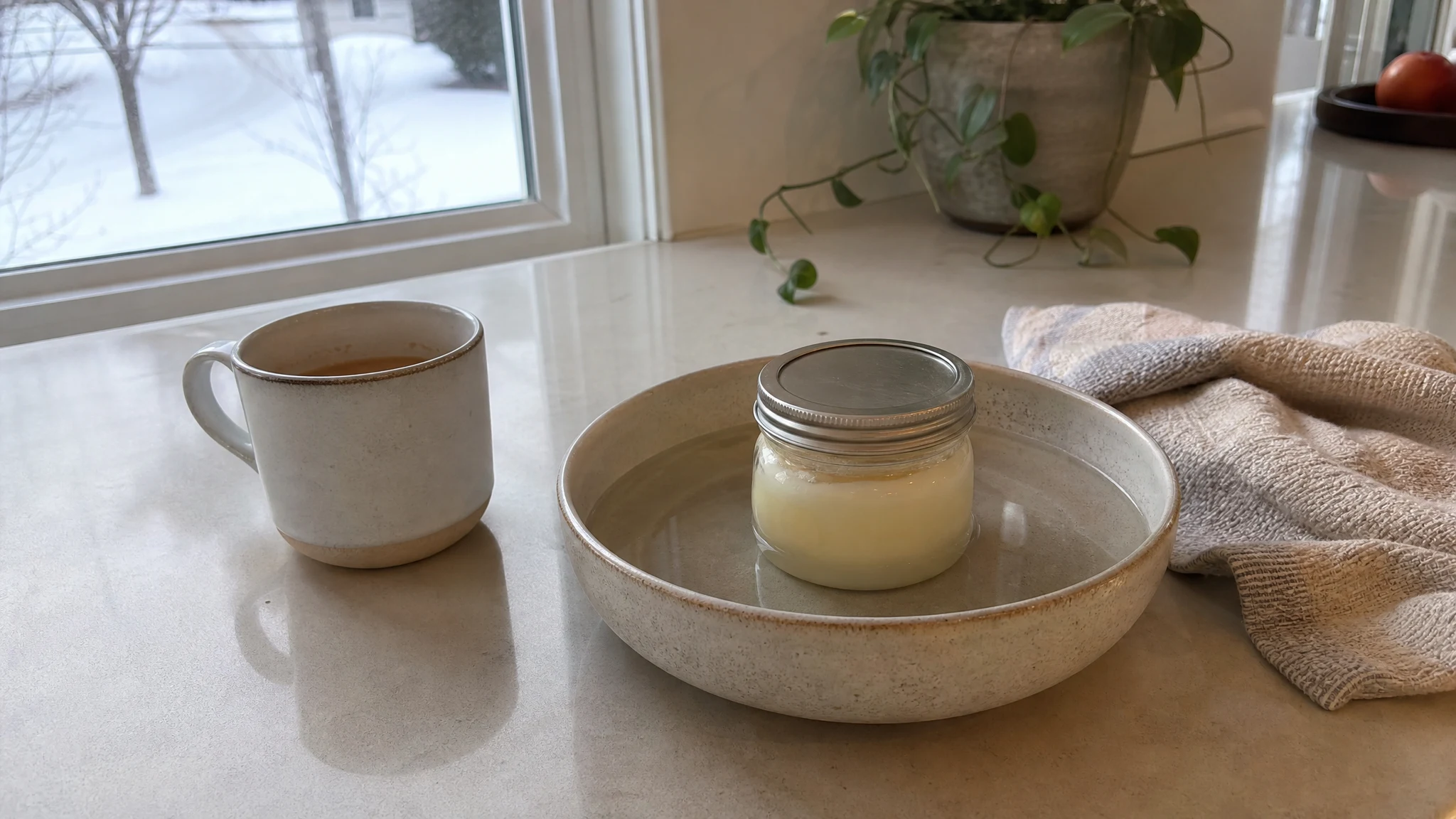
- Warm water bath. Stand the closed jar in a bowl of warm tap water, comfortable to the hand and not hot, for several minutes, then stir with a clean spoon. Gentle warmth is all it needs, and a long hot soak or microwave would only risk heating it more than it asked for.
Warming as a habit also speeds oxidation, so rewarm what you need and let the jar return to a cool shelf afterward. If the grains stay put at room temperature, a sit in the warm water usually dissolves them, and slow, steady cooling afterwards will tend to give a smoother set than a quick swing between hot and cold.
Firm is not the same as turned
The reason we write this at all is to keep good oil out of the bin. A change in texture is physical, and rancidity is chemical, and you can tell them apart with your nose. A set oil still smells like itself: earthy, nutty, a little toasty, as we describe in why batana oil smells and looks the way it does. A turned oil smells different in kind, sharp or stale, and that does not go away when you warm it. Our guide to batana oil shelf life and storage covers that side in full.
Texture alone will not tell you what an oil is made of, either. If you are weighing up a listing and not a jar you already own, our guide to real vs fake batana oil covers the questions worth asking a seller. For the jar in front of you, the answer is most often a cold kitchen.
So the next time the jar goes stiff overnight, think of it as the oil showing its natural character, and give it a little warmth.
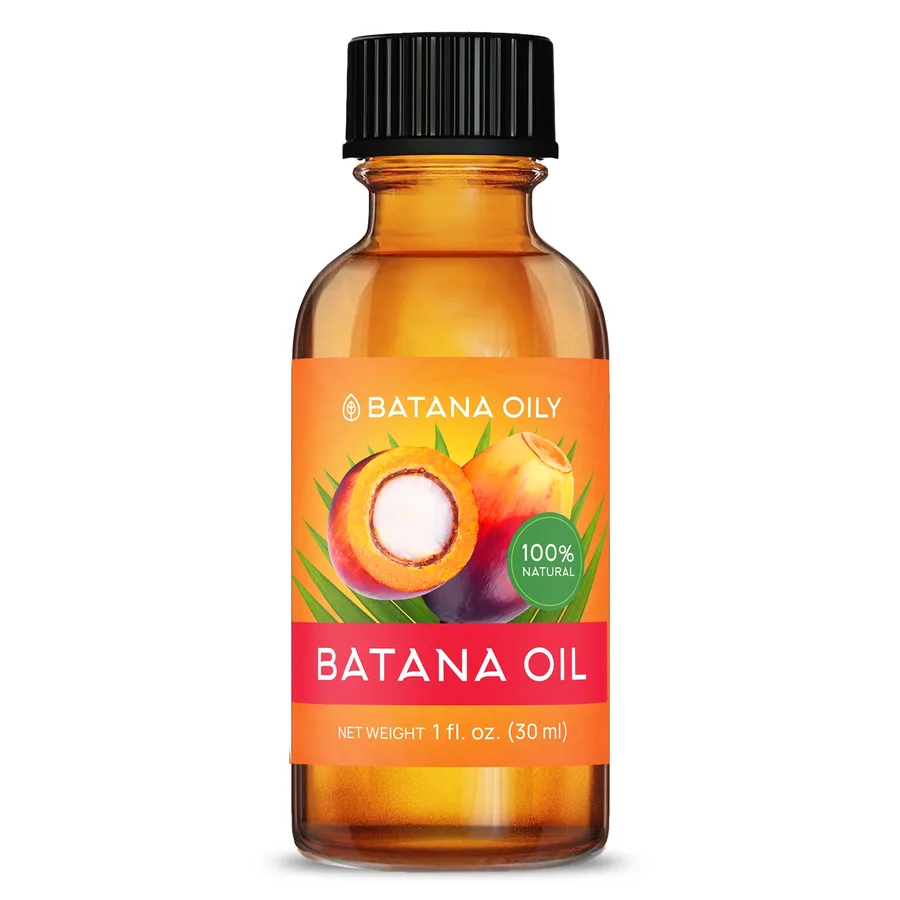
Natural Batana Oil
Honduran batana oil and batana butter, from a small bottle to bulk sizes.
From $12.99
Shop Batana Oil →Sources & Further Reading
- Current Knowledge on Interspecific Hybrid Palm Oils as Food and Food Ingredient. Foods 9(5):631 (2020). (Saturated and unsaturated fatty acids in palm oil; structure and crystallization properties.)
- Internal Factors Affecting the Crystallization of the Lipid System: Triacylglycerol Structure, Composition, and Minor Components. Molecules (2024).
- Properties of high-oleic palm oils derived by fractional crystallization. Journal of Food Science (2008).
- For People Skincare. Grainy or crumbly shea butter: causes and what helps.