Why Batana Oil Is Dark and Smells Toasty
Open a jar of batana oil expecting the neutral, pale, faintly greasy smell of a supermarket cooking oil and you will be surprised. Batana oil belongs to a different family of aromas: warm, nutty, a little toasty, a bit like a pan of seeds that has just come off the heat. That scent is not a flaw to be apologized for. It is the signature of how this kind of oil is made.
Toast first, press second
Batana oil comes from the American oil palm, Elaeis oleifera, and descriptions of the traditional Honduran method centre on roasting the nuts before the oil is pressed out. One seller's write-up of that process describes the finished oil as golden-brown with a nutty, earthy scent. Whatever the exact steps in a given village or workshop, heat does two things you can smell and see.
First, it triggers browning reactions between the natural sugars and amino acids inside the nut, the same chemistry that turns bread into toast and green coffee into coffee. In a study of palm kernels roasted at 180 °C, the longer the kernels roasted, the more furans and pyrazines turned up in the oil, which are the families of compounds behind caramel, nutty and roasted notes (the kernels in that study were from the African oil palm, but the chemistry is the same kind). Second, it is reasonable to expect heat to carry more colour and flavour into the oil than a cold, gentle press would.
So when batana oil smells toasty, you are smelling the cooking that happened before the jar was filled. We describe ours simply as having an earthy aroma, and that is exactly how we would like you to expect it.
Why the colour runs deep
Palm fruit oils get their colour from carotenoids, the same pigment family that makes carrots orange. The American oil palm is rich in them: a Brazilian study of five wild collections found total carotenoids above 1,500 milligrams per kilogram in the fruit oil of every one. Add the browning from roasting and you can see why an oil of this family is not clear and pale.
A pale palm oil on a supermarket shelf has usually been refined on purpose. In refining, a bleaching step removes part of the carotenoids, and a high-temperature deodorizing step (above 200 °C, under strong vacuum, in the process described for palm oils) breaks down what is left, which lightens the colour and strips most of the smell. That is how a naturally orange, aromatic oil becomes a bland, light, odour-free one, and it is the reason colour and smell travel together. We go into what the words on a label mean in raw vs refined batana oil.
A small decoder for your nose and eyes
Because no two producers do things identically, treat colour as a loose guide, not a fingerprint. Descriptions of batana oil vary from seller to seller, golden-brown in some and darker in others, and any oil looks different in a thin film than in a full jar. Smell is a better clue, and here is how we would read it:
- Toasty, nutty, earthy: the expected family for a traditionally made oil. Welcome to batana.
- Faint and sweet, like a perfume counter: worth a closer look at the ingredient list, since added fragrance is the usual cause. Our guide to real vs fake batana oil covers what to ask a seller.
- Sharp, crayon-like, paint-like or stale: that is a different smell from toasty, and it points to the oil having gone off. Batana oil shelf life and storage explains what that means and what to do.
- Nothing at all: an oil with almost no aroma or colour may have been refined, or it may not be batana. Ask the seller.
The line between "toasted" and "burnt" is real, and it is a matter of degree. A gentle roast reads as warm and nutty. Scorched, acrid notes would suggest the heat went too far. If you meet a smell like that, trust your nose over any story on the label.
Living with the aroma
Expect the aroma to be noticeable, especially if you came expecting something closer to coconut. A small amount goes a long way, so start with less than you think you need. If you like the idea of batana but want a gentler hand on it, our Natural Batana Butter is the thicker form of the same oil, with less to spill, and our Natural Batana Oil can be added by the drop to a favourite skincare product, or mixed with essential oils if you like a scent of your own. For a broader introduction to where all of this comes from, start with what batana oil is.
The dark, toasty character of batana oil is what happens when a plant oil is made with its colour and aroma left in. It is part of why people choose it, and part of why it smells like itself.
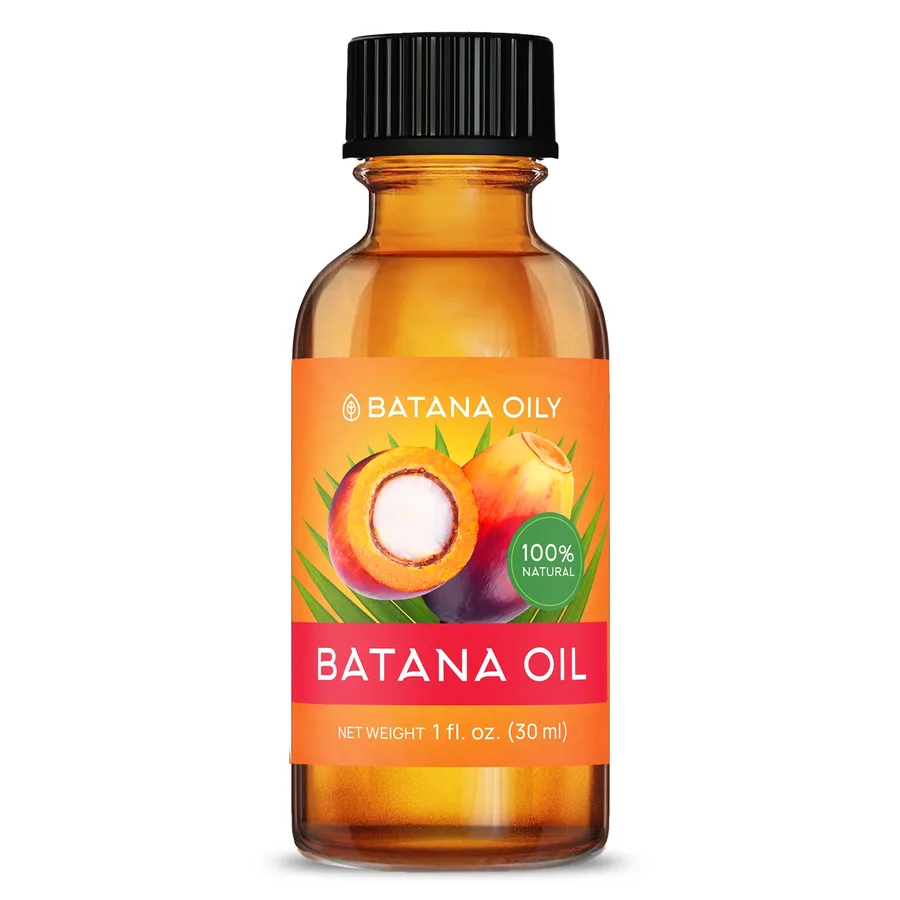
Natural Batana Oil
Honduran batana oil and batana butter, from a small bottle to bulk sizes.
From $12.99
Shop Batana Oil →Sources & Further Reading
- Current Knowledge on Interspecific Hybrid Palm Oils as Food and Food Ingredient. Foods 9(5):631. (Carotenoids in palm oils; effect of bleaching and deacidification on colour.)
- Chemical Characterization of the American Oil Palm from the Brazilian Amazon Forest. Crop Science (2018). (Carotenoid content of Elaeis oleifera fruit oil.)
- Changes in volatiles of palm kernel oil before and after kernel roasting. LWT - Food Science and Technology (2016).
- Grand Ingredients. Batana Oil for Hair and Skin: Benefits of Honduran Beauty Oil. (Seller description of the roast-and-press method and the colour and scent.)