What Is Batana Oil? A Plain Guide to the Honduran Palm Oil
Batana oil is not a recent invention, and it is not the palm oil in your snack cupboard. It is a traditional oil from a wild-growing Central American palm that Miskitu families in eastern Honduras have processed at home for generations, and it reached hair-care shelves far later than its history would suggest.
The short answer
Batana oil is a plant oil made from the American oil palm, Elaeis oleifera, which grows naturally in Central and South America. Miskitu communities in La Mosquitia, on Honduras' eastern coast, have long made it by hand and used it as a skin and hair-care product. In cosmetics today it is valued as a conditioning, softening oil with an earthy aroma.
Cousin of palm oil, not the same thing
The palm oil most people know comes from Elaeis guineensis, the African oil palm, grown in big plantations. The American oil palm is its relative, and the two can even be crossed. But the American palm is rarely planted. The Rainforest Alliance's case study of Honduran producers describes it growing in seasonally flooded forest and among mangroves around the Caratasca Lagoon, where Miskitu communities have managed and harvested it for generations.
There is a reason it never became a plantation crop. A 2020 review in Foods notes that E. oleifera gives significantly less oil than the African palm, though its fruit oil is richer in oleic acid, the same fatty acid you find in olive oil. That review puts oleic acid at roughly 50 to 70 percent of the American palm's fruit oil.
A word of caution on that number. Most published fatty-acid figures describe oil from the fruit pulp, while batana is traditionally the seed-side oil, and a cosmetic-ingredient guide points out that kernel oil and fruit oil carry different INCI names because they are not automatically the same. So when a page prints a tidy fatty-acid table for batana, read it as a clue, not a spec sheet. We go deeper on this in what batana oil is made of.
Who made it first
The Rainforest Alliance report describes batana as used for generations by Miskitu communities on skin and hair, and made locally for most of that time. A small domestic market appeared in the 1980s, and a Canadian beauty company began buying oil from producer groups in 2003. That company took its name, Ojon, from the Miskitu word for the palm, which is one reason the names get tangled; we sort that out in batana oil vs Ojon oil.
The people behind the oil matter more than the marketing around it. The same report says harvesting and transport are commonly done by men, while women typically take over at the processing stage, working the fruit by hand. If you want the full story of the place and the people, read where batana oil comes from, and for the steps themselves, how batana oil is made.
What it is for, and what it is not
We sell batana as a cosmetic oil, and we would keep it in that lane. On hair it conditions and softens and can add shine, which is why people use it on ends and lengths. On skin it moisturizes and leaves a soft feel. Our Natural Batana Oil has an earthy aroma, and our Natural Batana Butter is the thicker form of the same idea, handy if you prefer something that is less likely to drip.
It is not a medicine, and published research on batana oil itself is thin: the papers on the palm are mostly about agriculture, breeding and fatty acids, not about what the oil does on a head of hair. If your concern is a medical one, such as sudden changes in your hair or a rash that will not settle, that belongs with a dermatologist, and a cosmetic oil is not a substitute for that visit.
If you are curious about trying it, how to use batana oil and batana oil for hair cover the practical side, how to choose batana oil helps you read a label, and is batana oil safe explains patch testing. Our own line is simple: skin and hair vary from person to person, so patch test before first use, avoid eye contact, and keep it for external use only.
Once you know it is a hand-made oil from a wild palm with a long local history, the rest of the conversation about batana oil gets easier to follow, and a good deal of the hype gets easier to ignore.
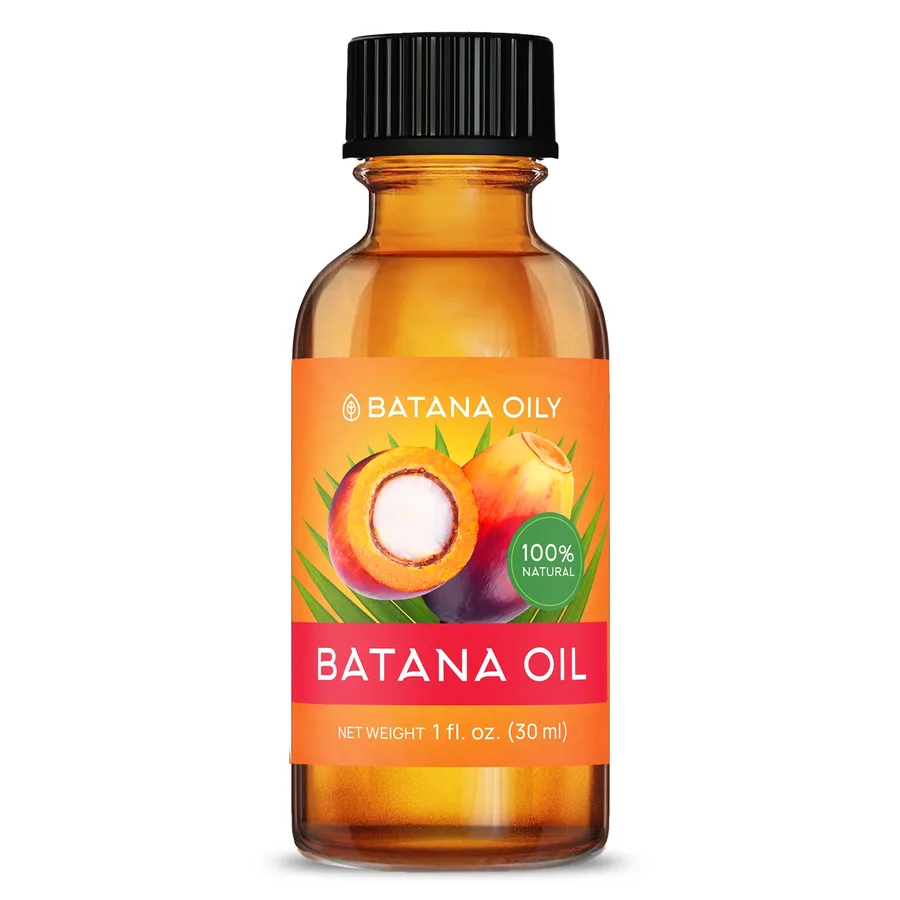
Natural Batana Oil
Honduran batana oil and batana butter, from a small bottle to bulk sizes.
From $12.99
Shop Batana Oil →Sources & Further Reading
- Developing Indigenous Community Forestry Enterprises: Where Tradition Meets the Market (Rainforest Alliance, 2015), the case study of Miskitu batana producers in Honduras.
- Current Knowledge on Interspecific Hybrid Palm Oils as Food and Food Ingredient (Foods, 2020), on the American and African oil palms.
- Ojon Oil in Cosmetics: A Plant Oil with New Potential (Cosmacon), on kernel oil versus fruit oil.