How Batana Oil Is Made: From Palm Fruit to Jar
A single cluster of American oil palm fruit can weigh up to 15 kilograms, and a mature palm may carry ten or eleven of them. Getting from that red, heavy cluster to a spoonful of oil is the whole story of batana, and almost every step in it is done by hand.
What the documented process looks like
The most careful account we know of comes from a Rainforest Alliance case study of Miskitu batana producers in Honduras. It describes the traditional sequence like this:
- Ripe clusters, recognizable by their red fruit, are cut by hand with hatchets or machetes. Harvesting is possible all year and usually peaks from June to December.
- The clusters are carried to a processing area, typically the home, on foot or by boat.
- The fruits sit in the sun for two to three days, which helps the parts separate.
- They are then cooked and worked by hand with a mortar and pestle to remove the outer skin and separate the fibrous pulp from the seed.
The report adds a detail that surprises many people: the pulp is not the prize. Called wina batana in Miskitu, it is used locally as a frying medium and fuel, while the white layer around the seed is the part processed into the oil. That is a long way from industrial palm oil, which is pressed mostly from the fruit pulp.
Where the accounts part ways
Here is an honest gap. The case study documents the harvest and the early handling, but does not walk through the final stage in detail. Retail and brand descriptions fill it in differently: some describe cooking the kernels over a fire and skimming off the oil, others describe gentle roasting, and others say pressing. They cannot all be describing the same method, and none of the sellers' accounts is independent documentation.
So the fairest summary is that the early steps are well described and the last ones vary from household to household and from seller to seller. That variation is not a defect. It is what you would expect from a craft done in many homes across a wide, wet region.
It also explains why batana oils differ. Heat, time and what is skimmed or filtered can change aroma, color and texture, so two jars labeled batana can look and smell different without either being wrong. We take that up in raw vs refined batana oil, and in what batana oil is made of.
Hand-made versus industrial
Hand processing in a household is one end of the range. At the other end, a cosmetic-ingredient supplier describes a kernel-based grade that is gently cold-pressed and then fractionated to isolate a lighter, liquid portion, and it notes that "traditional small-scale production" and "specialized processes" also exist. Same palm, very different routes.
In practice that means the words on a bottle matter. A tidy, uniform liquid and a rough, aromatic paste can both start as American oil palm nuts. Neither is automatically better; they are different products for different uses, and a seller should be able to tell you which one you are buying. Our guide on how to choose batana oil has the questions to ask.
What we can tell you about ours
For our own oil we keep to what we know. Our Natural Batana Oil is extracted from the nuts of the American oil palm, from Honduras, crafted in small batches using traditional methods. Our Natural Batana Butter is cold-pressed and sold as the thicker form, with the same uses as the oil and less tendency to drip. If you are weighing the two, batana oil vs batana butter compares them. You can read how we think about the palm on our batana plant page.
For the people and the place behind the process, see where batana oil comes from, and for the plain-language overview, what is batana oil.
Once you picture those first steps, the sun-drying and the mortar and pestle, it is easy to see why this was never an oil that came in vast quantities.
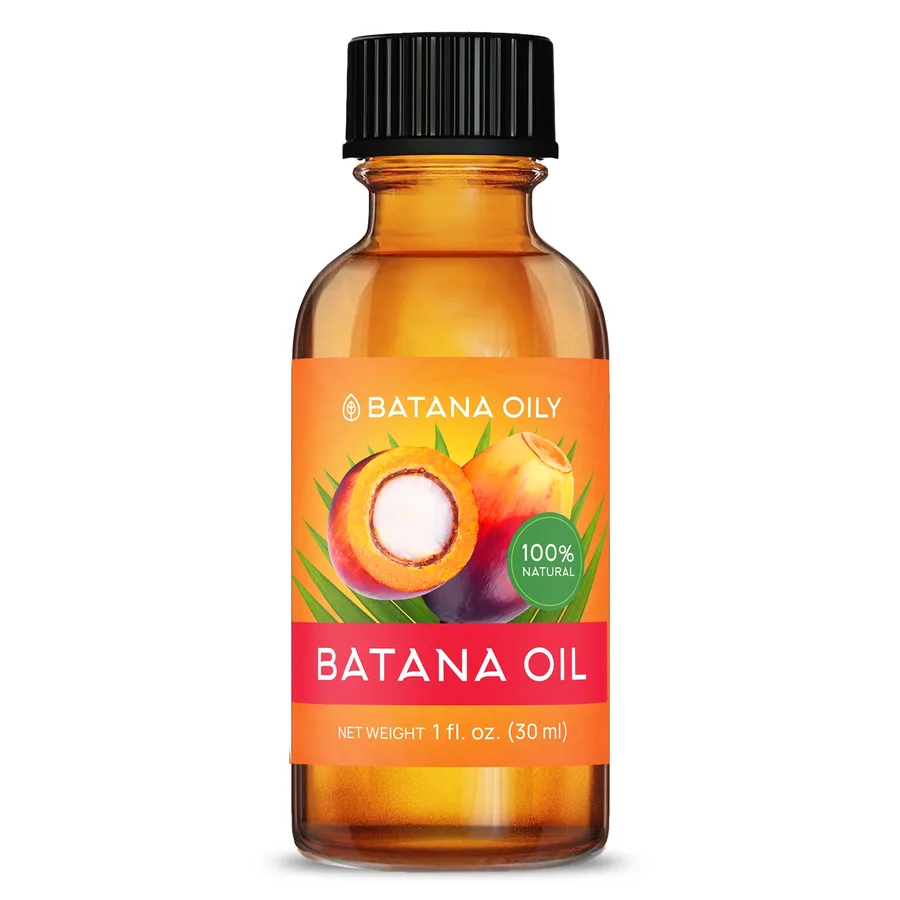
Natural Batana Oil
Honduran batana oil and batana butter, from a small bottle to bulk sizes.
From $12.99
Shop Batana Oil →Sources & Further Reading
- Developing Indigenous Community Forestry Enterprises: Where Tradition Meets the Market (Rainforest Alliance, 2015), the Moskibatana case study, which describes harvest and early processing.
- Ojon Oil in Cosmetics: A Plant Oil with New Potential (Cosmacon), on kernel-based grades and cold pressing.