Raw, Unrefined, Cold-Pressed: Reading a Batana Label
Read enough batana oil listings and a pattern appears: raw, unrefined, pure, cold-pressed, virgin, all stacked on one bottle. They sound like five ways of saying the same good thing. They are not, and a couple of them cannot be true of the same oil at the same time.
Refined is a process, and you can name its steps
Refining is the one word on that list with a clear meaning, because it describes a sequence of things done to a crude oil. The palm oil literature lays it out plainly. A degumming and bleaching stage comes first, removing gums and part of the natural pigment by adsorption. Then comes deacidification, in the physical refining route done at very high temperature (above 200 °C) under strong vacuum, and the heat degrades the carotenoids that remain. The aim, in the words of that review, is to lighten the colour so the oil can slip invisibly into ice cream, bread and margarine.
That is a fair goal for a food ingredient and a poor match for what many batana shoppers are after. A refined palm-family oil is paler, milder and more uniform, and the pigments and aroma that made a crude oil distinctive are largely gone. Refining is not a scandal, it is simply a choice, and the useful question is which side of it the oil on your screen sits on.
The other four words are mostly adjectives
Here is how we read them on a batana label, as plain reasoning and not as official definitions:
- Unrefined says the steps above were skipped. It is the most meaningful of the four, because you can ask which steps and get a factual answer.
- Raw suggests nothing was heated. Hold on to that for a moment, because it collides with something below.
- Cold-pressed suggests the oil was squeezed out mechanically without added heat. It describes how oil left the plant material, which is a separate matter from whether it was later refined.
- Pure is a feeling, not a measurement. It could mean one ingredient, or it could mean the seller likes the sound of it. The ingredient list is where purity actually lives.
Now the collision. Traditional batana oil is described as made by roasting the nuts and then pressing them, which is what gives it a toasty aroma, as we explain in why batana oil is dark and smells toasty. An oil made that way has been heated by design. It can be unrefined, and it can be wonderful, but it is hard to call it raw or cold-pressed with a straight face. When a listing claims both a roasted, toasty character and a raw, cold-pressed process, one of those two statements deserves a question.
What we say about ours
We would rather tell you what we can stand behind than borrow the prettiest words. Our Natural Batana Oil is from Honduras, extracted from the nuts of the American oil palm, crafted in small batches using traditional methods, and it comes from a single trusted supplier. We do not describe it as raw, unrefined or cold-pressed, because those are specific claims and we would rather not make them lightly. Our Natural Batana Butter is the one we describe as cold-pressed, entirely free from synthetic additives, with the same uses as the oil in a thicker consistency. If that distinction matters to you, it is worth knowing before you choose between the two on our shop page.
Reading the label like a regular
A short routine beats memorizing definitions:
- Find the ingredient list. In the United States, cosmetic ingredients are listed in descending order of predominance, so a real single-ingredient oil should show one name, and anything added will show up after it. Scent can legally be declared as just "fragrance", which is worth noticing on an oil that is supposed to smell of nuts.
- Look for the botanical name. Elaeis oleifera is the American oil palm that batana comes from. Our look at real vs fake batana oil covers the names that matter.
- Ask one factual question. Was it heated? Was it refined or bleached? A seller who knows will answer in a sentence. A seller who replies with more adjectives has told you something too.
- Match the words to the smell. A pale, odourless oil does not match a roasted story. A strong toasty one does not match a "raw" story.
For the wider checklist, including how to think about cost without chasing the lowest number, see how to choose batana oil, and for the process itself, how batana oil is made.
None of these words is a quality guarantee, and none of them is a trap. They are clues, and a label that answers your questions plainly is a good sign whichever word it uses.
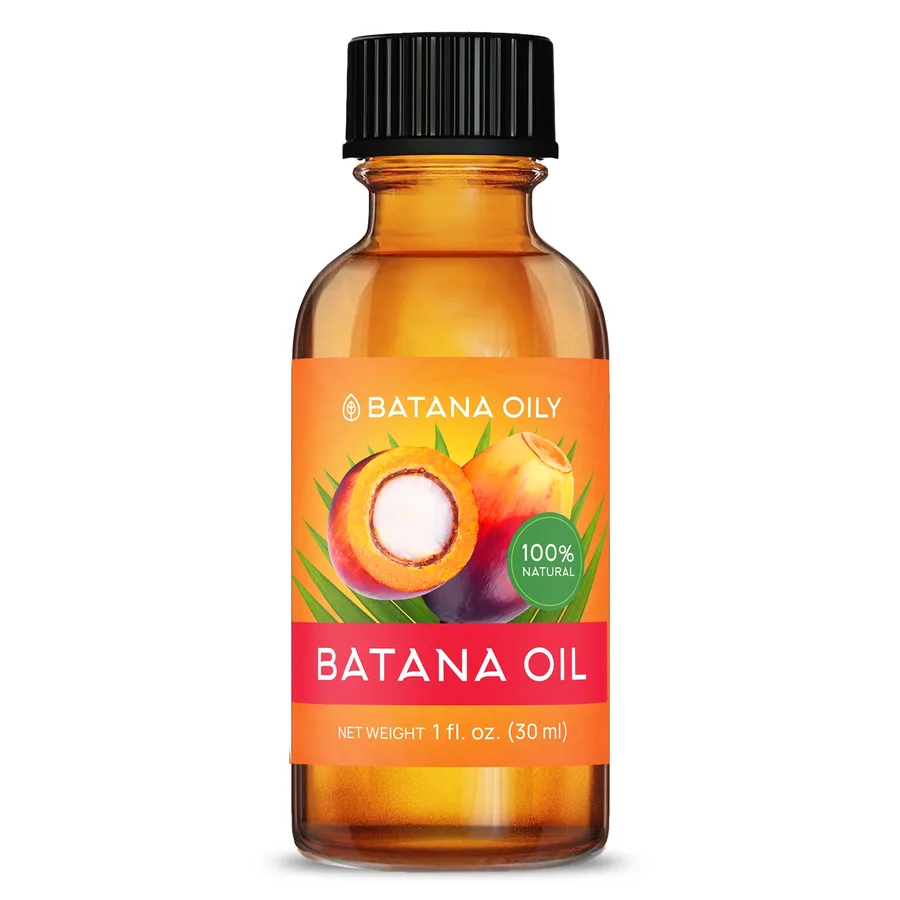
Natural Batana Oil
Honduran batana oil and batana butter, from a small bottle to bulk sizes.
From $12.99
Shop Batana Oil →Sources & Further Reading
- Current Knowledge on Interspecific Hybrid Palm Oils as Food and Food Ingredient. Foods 9(5):631 (2020). (Degumming, bleaching and deacidification of palm oils, and their effect on colour and carotenoids.)
- U.S. Food and Drug Administration. Cosmetics Labeling Guide. (Ingredient declaration order; fragrance may be declared as "fragrance".)
- Changes in volatiles of palm kernel oil before and after kernel roasting. LWT - Food Science and Technology (2016).