Batana Oil vs Ojon Oil: One Palm, Two Names
Ask whether batana oil and Ojon oil are the same thing and you will get a confident yes, a confident no, and a lot of product pages in between. The honest answer is that the two names share a palm, one of them is also a company, and a little history clears up most of the confusion.
Is batana oil the same as Ojon oil?
As a plant oil, yes: both names point to oil from the American oil palm, Elaeis oleifera. The Rainforest Alliance's case study of Honduran producers says the oil is known as batana and also as ojon, and that ojon is the Miskitu word for the palm. Batana is the name the oil goes by locally. You will also see "ojon" used as the name of the palm itself.
The confusion starts because Ojon is also a brand. The same report explains that the beauty company that began buying oil from Honduran producers by 2003 took its name from that Miskitu word. So "Ojon" can mean the palm, the oil, or a company's hair-care products, depending on who is writing.
What is the brand, then?
Trade press from the time gives the outline. Happi reported on July 10, 2007 that Estée Lauder would acquire Ojon Corporation, a privately held Canadian hair-care company incorporated in 2003, and that its products were made with palm nut oil gathered by the Tawira, as the article called the community. The terms were not disclosed, and the article said the ingredients were largely palm oil and cacao, which tells you something: a branded Ojon product is a formulated hair-care line, not a bottle of the plain oil.
That is the useful distinction. A brand name on a conditioner or treatment describes a recipe a company designed. Batana oil is the ingredient. We make no claims about any other company's products here; the point is only that you should know which one a page is selling you.
Is it the same as palm oil?
No. Conventional palm oil comes from Elaeis guineensis, the African oil palm, grown in plantations. The American oil palm is a different species. A 2020 review in Foods notes it yields significantly less oil, which helps explain why it is rarely planted, and that the two species can be crossed to make hybrids. Traditional batana, as the Honduran case study describes it, comes from palms that grow naturally in the Muskitia rather than from plantation or hybrid stock. More on that in what is batana oil.
Does the label help?
Sometimes. Cosmetic ingredient names separate "Elaeis Oleifera Kernel Oil" from "Elaeis Oleifera Fruit Oil," and a supplier guide points out that these are not automatically chemically identical. Batana is traditionally the seed-side oil, according to the Honduran case study, which describes the layer around the seed as the part processed into oil, while the pulp has other local uses. So if you see an INCI name, it is worth noticing which part of the palm it names. Our guide to choosing batana oil and our look at real vs fake batana oil go through what else to check.
Where our oil sits
We sell Natural Batana Oil and Natural Batana Butter, both from Honduras, with the oil extracted from the nuts of the American oil palm. We use the name batana because that is the name the oil carries where it is made. If you want the cultural background behind the names, where batana oil comes from tells the story of the Miskitu people and the Muskitia, and how batana oil is made covers the process.
So the short version is easy to remember: one palm, two local names, and one company that borrowed one of them.
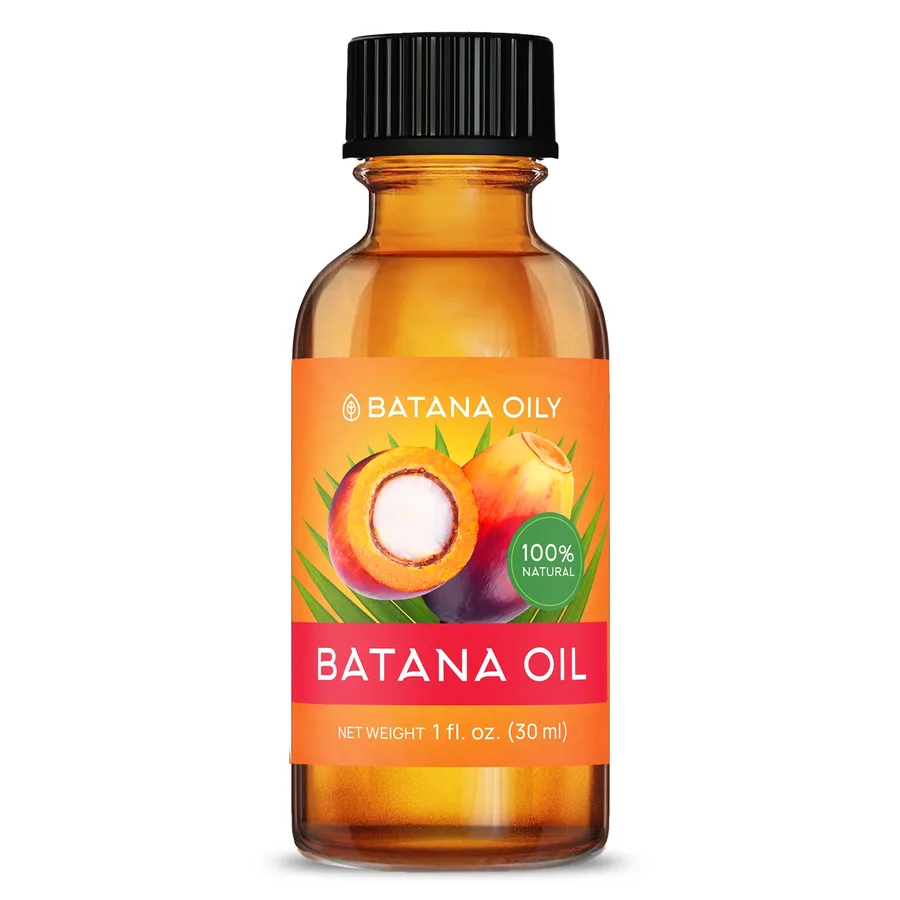
Natural Batana Oil
Honduran batana oil and batana butter, from a small bottle to bulk sizes.
From $12.99
Shop Batana Oil →Sources & Further Reading
- Developing Indigenous Community Forestry Enterprises: Where Tradition Meets the Market (Rainforest Alliance, 2015).
- Estee Lauder To Acquire Ojon (Happi, July 10, 2007).
- Current Knowledge on Interspecific Hybrid Palm Oils as Food and Food Ingredient (Foods, 2020).
- Ojon Oil in Cosmetics: A Plant Oil with New Potential (Cosmacon).