Batana Oil on Eyelashes: Why We Leave the Lash Line Off
It is a fair question, and it usually arrives in the evening, with a small bottle in one hand and a mirror in the other: if a drop of batana oil makes hair look soft and glossy, what would it do for lashes? We love this oil, and our honest answer is that the lash line is the one spot we would leave off.
Our position, plainly
Our own usage line says to avoid eye contact, and a lash line is as close to the eye as hair gets. The FDA puts the same idea in one sentence on its eye cosmetic safety page: do not use any cosmetics near your eyes unless they are intended specifically for that use. Natural Batana Oil and Natural Batana Butter are hair and skin products for external use, so the eye area is not what they are for. We feel the same about it as we do about brows, where we explain how to keep a trace of oil on the brow hair itself and well clear of the lid. Lashes are a step closer, and we would rather stop there.
What a drop could and could not do
Realistic expectations are short. An oil can make lashes look a little glossy and feel softer for a few hours. We make no promise about how many lashes you have, how long they are or how thick they look, and we would be wary of anyone who does. Oil also moves. A smear on the upper lashes can drift toward the eye or the lid as you blink and as the evening goes on, and it can blur your vision or smudge makeup. All of that is reasoning from how oils behave rather than something a study measured, but it is the reason a glossy lash is a thin reward for the trade.
Why the eye area gets its own rules
Eye products are held to a different standard because of what can go wrong there. The FDA explains that misused eye cosmetics can grow bacteria or fungi that cause infection, and that in rare cases infections have temporarily or permanently blinded people. It also warns that applicators matter: whatever touches the eye area should be clean.
One FDA study is worth knowing about. In 2014 its scientists surveyed 93 eye-area products sold as green, natural, paraben-free or preservative-free. About six in ten showed no microbial growth, a third had low-level contamination and 8 percent had higher counts, mostly Bacillus and Staphylococcus. The authors suggested natural raw materials as a likely source of the Bacillus. Our reading is that a jar you dip a finger or brush into, then use near your eyes, is not a product designed for that job.
If you decide to anyway
Some people will try it whatever we say, so here is the harm-reduction version, once. It is built from the FDA's guidance and plain arithmetic, and we still would not do it ourselves.
- Patch test first, on your forearm, and give it a full day or more. Our patch test guide has the method.
- Wash your hands, and use a fresh clean cotton swab each time rather than a fingertip or a shared brush. Never dip a used applicator back into the jar.
- Use a trace, far less than a drop, on the outer lash tips only, with your eyes closed and nothing near the waterline or inner lid.
- Skip it entirely if you have an eye infection or the skin around your eyes is red or inflamed. The FDA says to wait until the area is well.
- Keep the jar clean and out of heat; the FDA advises against storing cosmetics above 85 degrees Fahrenheit.
When to stop, and who to see
If anything stings, burns, itches or turns red or puffy, stop at once and rinse gently with clean lukewarm water. The FDA says to stop using a product immediately if it causes irritation, and to see a doctor if the irritation continues. Pain, discharge or any change in your vision means a call to an eye doctor the same day. Our safety overview covers the wider picture. Lash or lid changes that worry you, such as sore, crusty or swollen edges, belong with a doctor or ophthalmologist, since a cosmetic oil is not the answer to a medical question.
Where the oil does shine
If you love the ritual of a small oil step, there is plenty of hair that will thank you: the ends, a dry patch around the hairline, the nape. How to use batana oil has the amounts, and a little goes far. Lashes already have their own tools in the beauty aisle, made for the eye area and labelled for it. That is where we would send them.
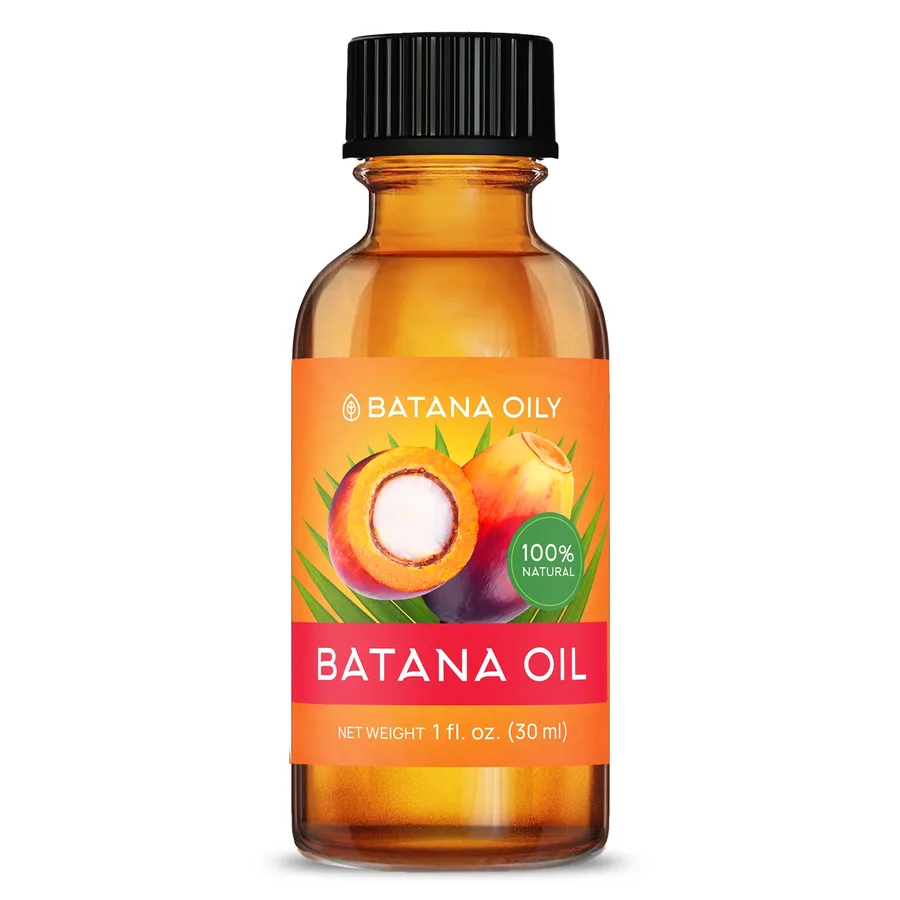
Natural Batana Oil
Honduran batana oil and batana butter, from a small bottle to bulk sizes.
From $12.99
Shop Batana Oil →Sources & Further Reading
- Eye Cosmetic Safety (U.S. Food and Drug Administration)
- FDA 2014 survey of eye area cosmetics for microbiological safety (Letters in Applied Microbiology, 2018)